High Altitude, Deep Silence, Infinite Color
Welcome to Perù, a land where the extraordinary unfolds at every turn, and where nature seems to have been imagined on a different scale. From the soaring peaks of the Andes, to the surreal shades of Rainbow Mountain, from the vast silence of the desert to the lush depths of the Amazon, every landscape reveals a world of its own. Here, the air is thinner, the horizon wider, and the beauty often feels almost beyond reality. A country of striking contrasts and vibrant colors, Perù is as rich in sensations as it is in landscapes.
Join us as we journey to discover that Perù is not merely a destination - it’s a sensory awakening, where every moment leaves something extraordinary behind.
A journey to Peru can be shaped in one million ways - it can span anywhere from a few weeks to several months, and transforms completely depending on the regions you choose to explore.
In this guide, we will focus on a thoughtfully curated two-week exploration centered on specific regions, keeping in mind that this route can seamlessly be lengthened or enriched with extra destinations.
Day 1, 2 - Lima
Overlooking the vast expanse of the Pacific, Lima is a captivating metropolis of infinite souls - a city where pre-Inca ruins, ornate colonial architecture, and sleek contemporary design seamlessly coexist. Its story unfolds through a world-renowned culinary scene, sun-drenched coastal cliffs, and art-filled quarters and boutique spaces.
Lima is a city that invites you to slow down and leave space for spontaneous discovery of its layered identities. Allow yourself a few days of time to walk around the bohemian alleys of Barranco, the historic plazas of the Centro Histórico and Miraflores district, discovering art galleries, local craftsmanship, concept stores and excellent food.
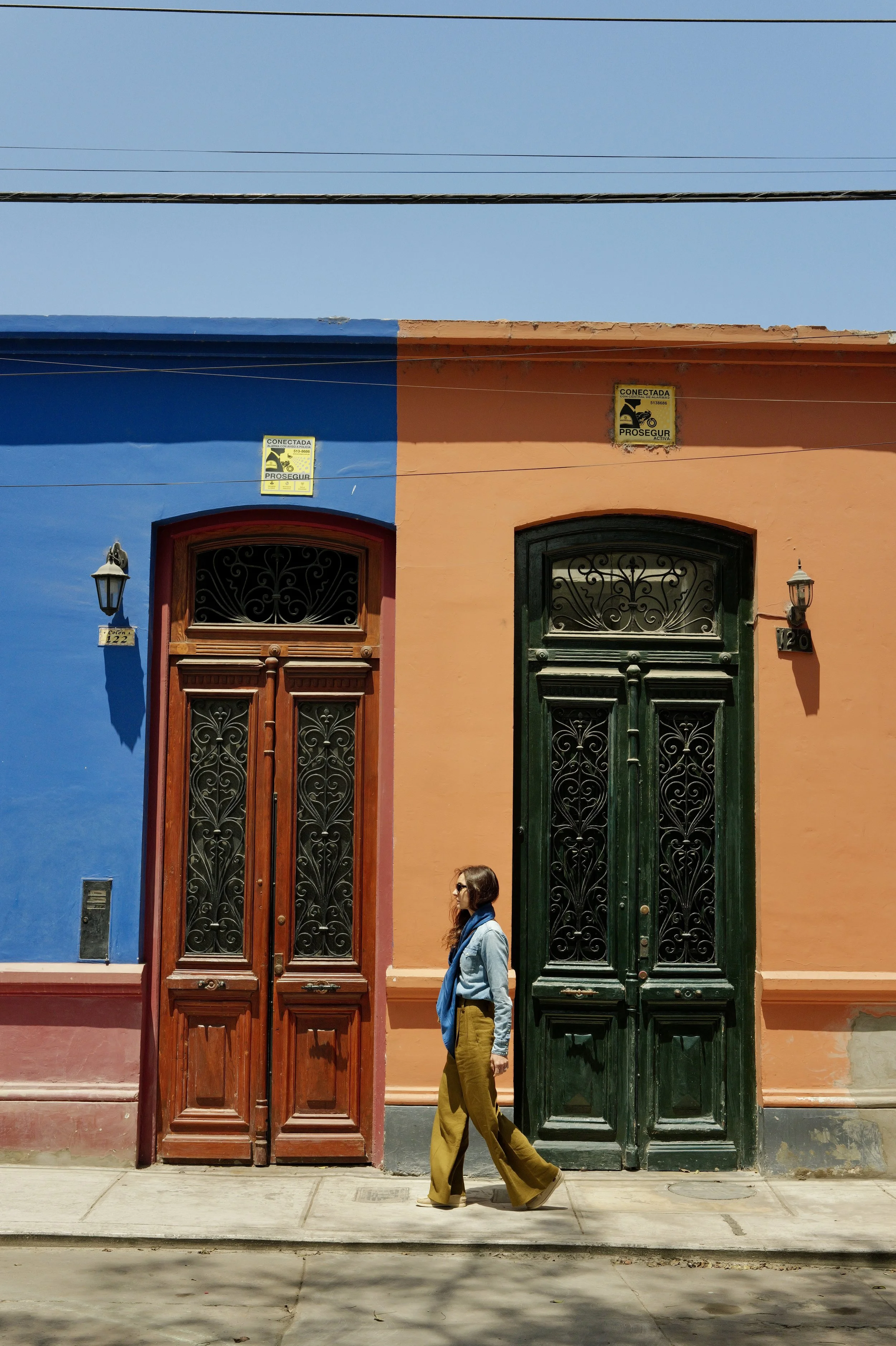
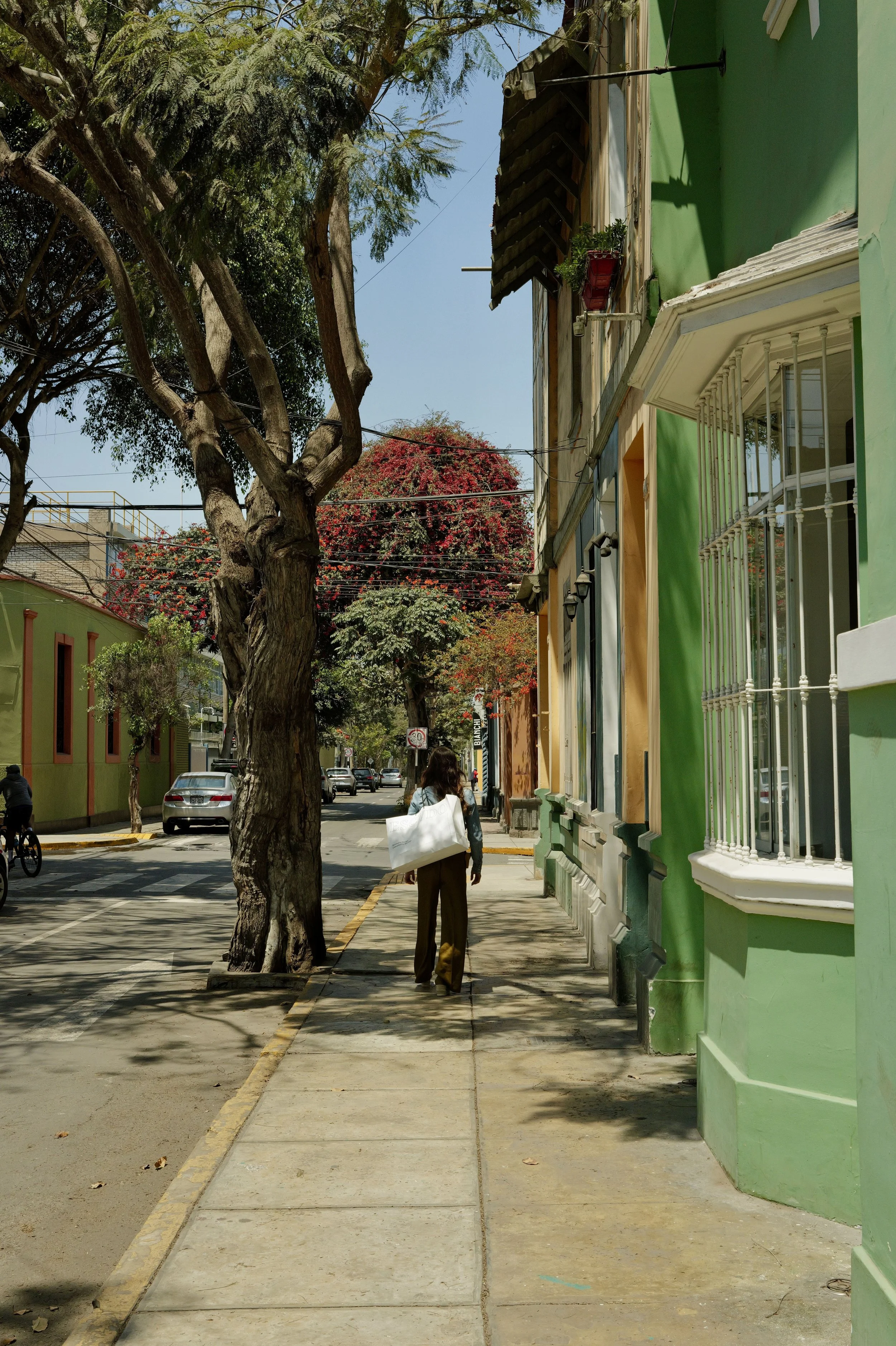
Below a list of our favorite spots.:
Art galleries
Restaurants
Shopping
ESCVDO: a brand deeply rooted in native natural fibers and ancient Inca weaving traditions, beautifully preserving generations of heritage knowledge through sustainable design.
Lima is a sprawling metropolis and, like any major city, requires a certain awareness of your surroundings. To experience it at its best, we recommend basing yourself in Barranco or Miraflores, where you can explore on foot with ease. Even so, it is always wise to check in with your hotel for tailored advice on where to go and the best way to get around.
Day 3, 4 - Arequipa
After a few days in Lima, it’s time to start your journey. We definitely suggest making Arequipa your first stop, as it’s the perfect starting point to adapt to the altitude. We also suggest staying at CIRQA, an 11-rooms hotel located in the historic heart of the city. Housed in a restored 16th-century monastery, the property is built from local white volcanic stone (sillar), offering an intimate atmosphere with historic courtyards and modern interior design.
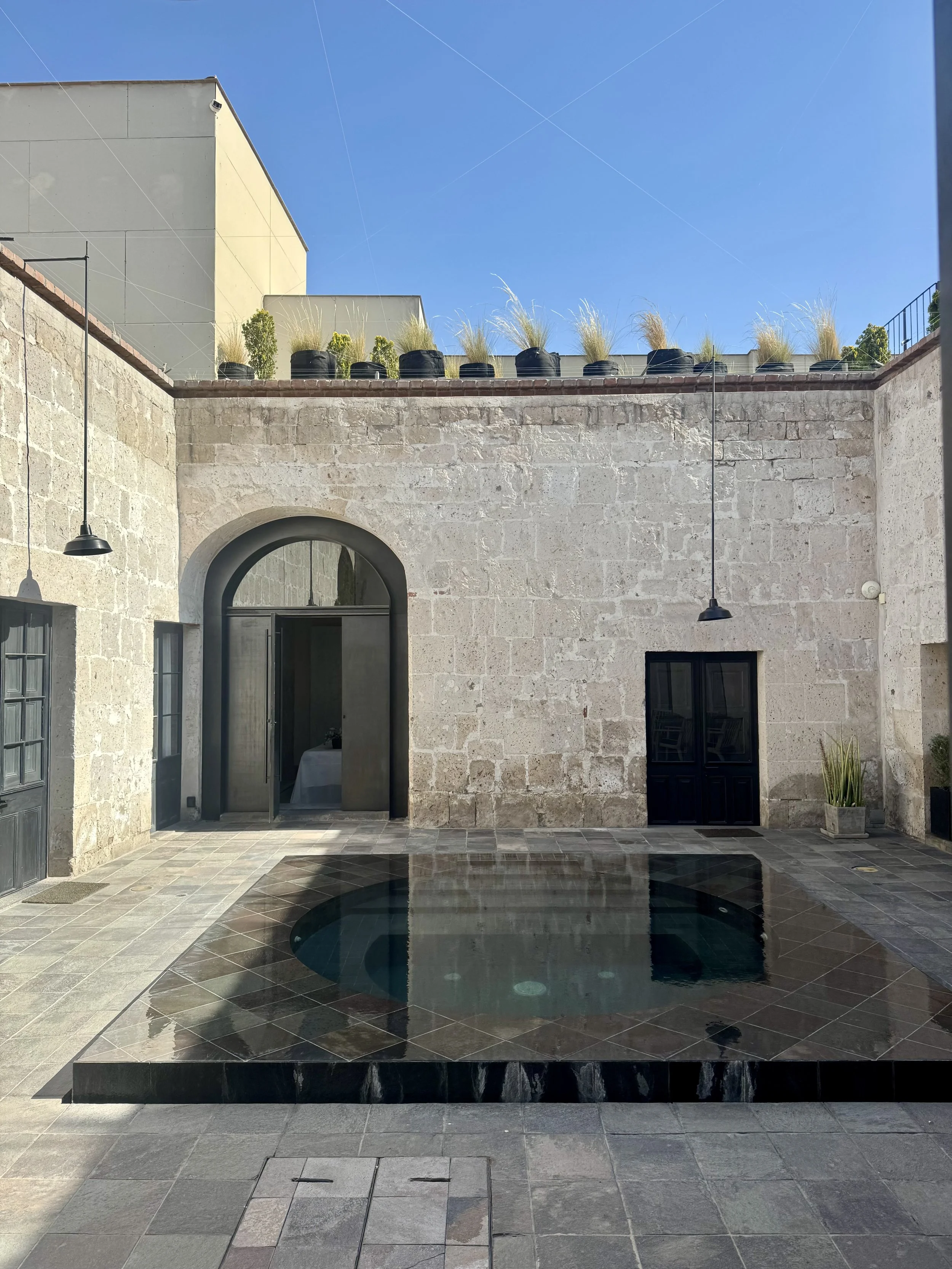
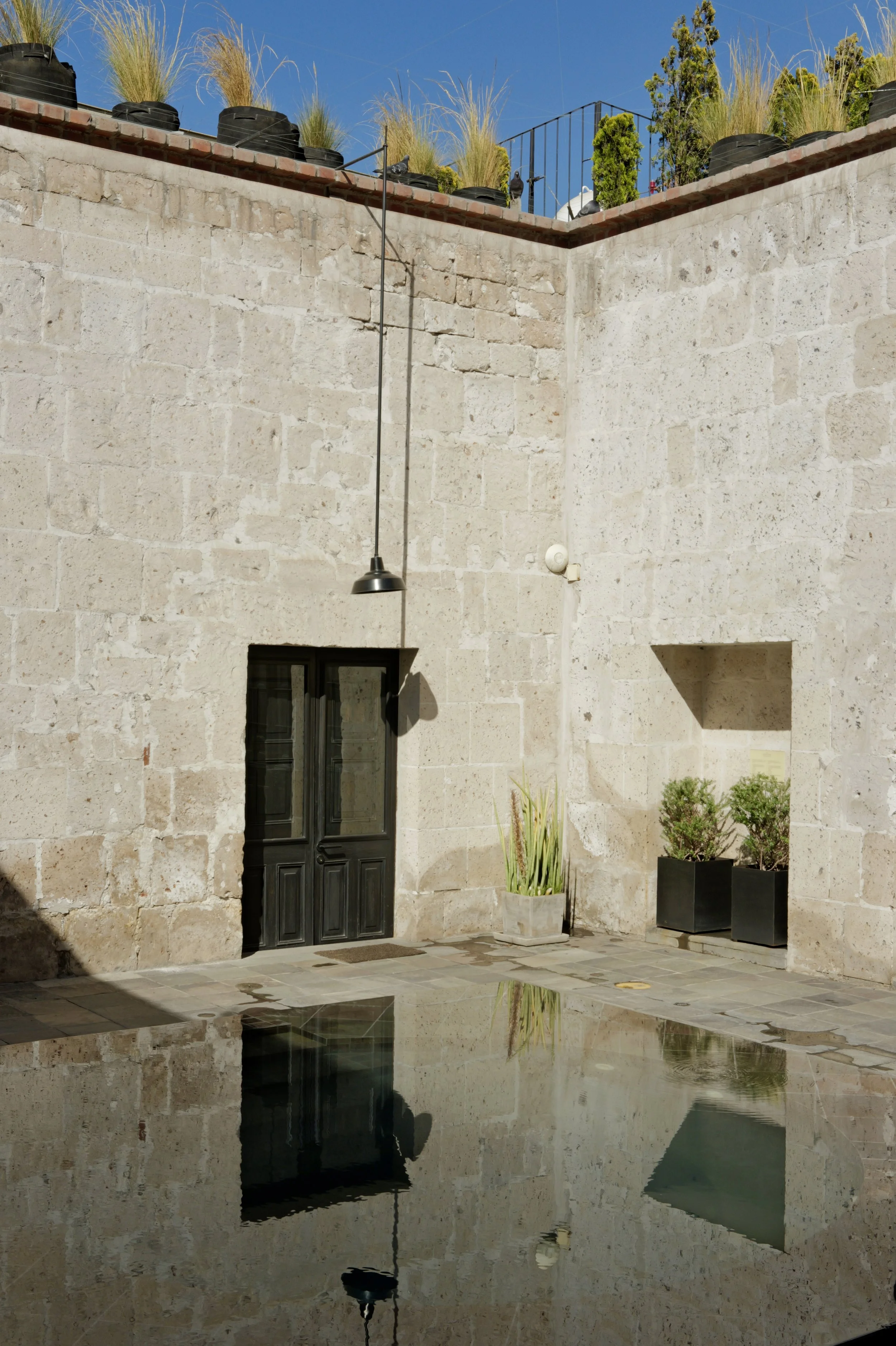
You’ll find yourself in a completely different scenario: Arequipa is framed by three volcanos and almost entirely made of sillar, a pale and luminous volcanic stone to which owes its nickname of Ciudad Blanca (White City). Wear comfortable shoes and walk around the city, discovering its historic buildings and cloisters, their elegant facades and grand arcades.
Unmissable is the Santa Catalina Monastery, a real city within the city, which deserves several hours to be seen in detail. Spanning over 20,000 square meters in the heart of Arequipa, it functioned for nearly four centuries as an entirely cloistered citadel, completely cut off from the outside world behind high stone walls. Built predominantly from volcanic ash stone (sillar), the complex is organized like a miniature Spanish village, complete with narrow cobblestone streets, plazas, fountains, and lush gardens. Breathtaking are the vibrant terracotta and cobalt blue passages, opening up on orange tree cloisters, and sunlit courtyards where time seems to have stood still.
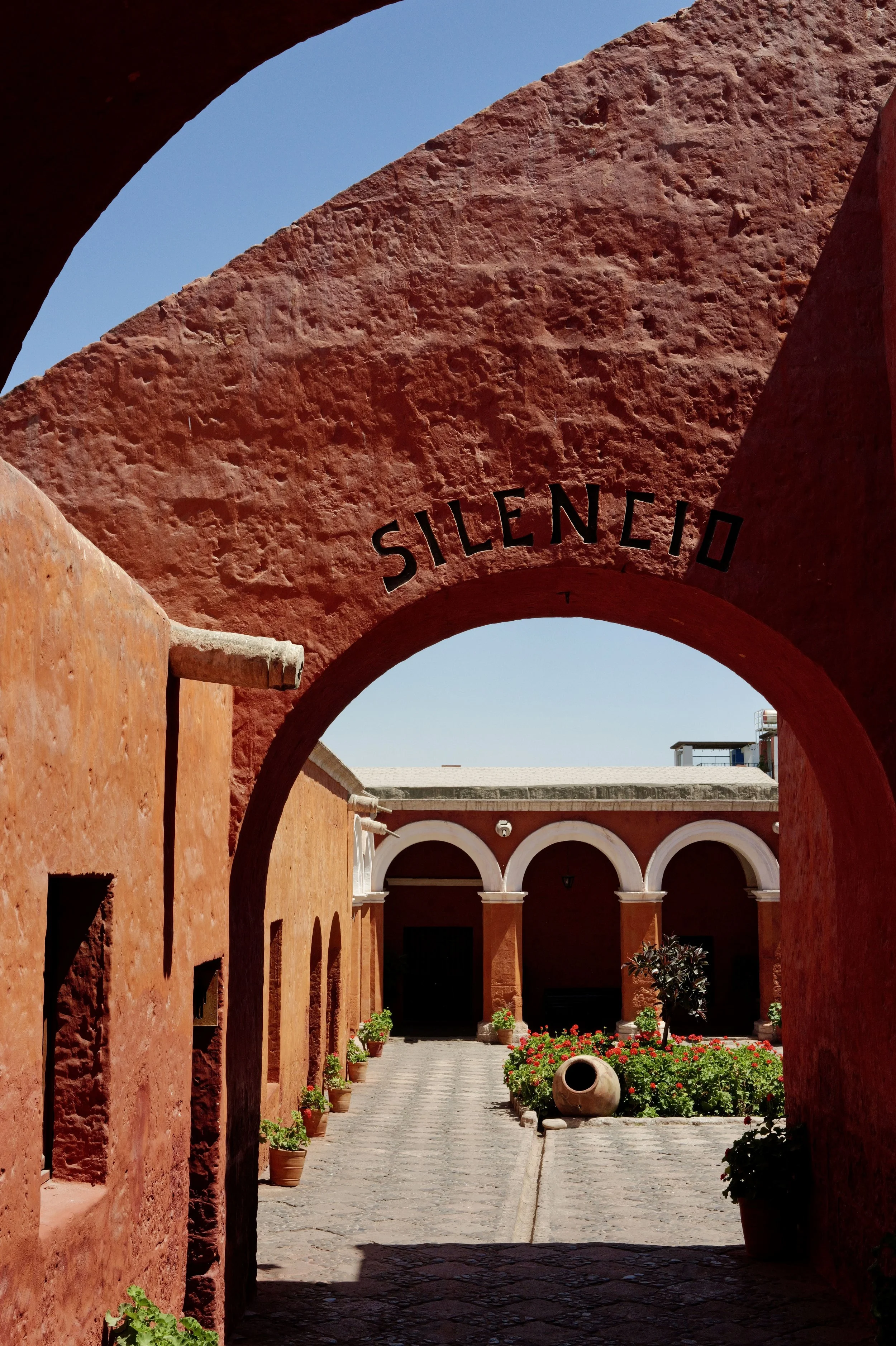
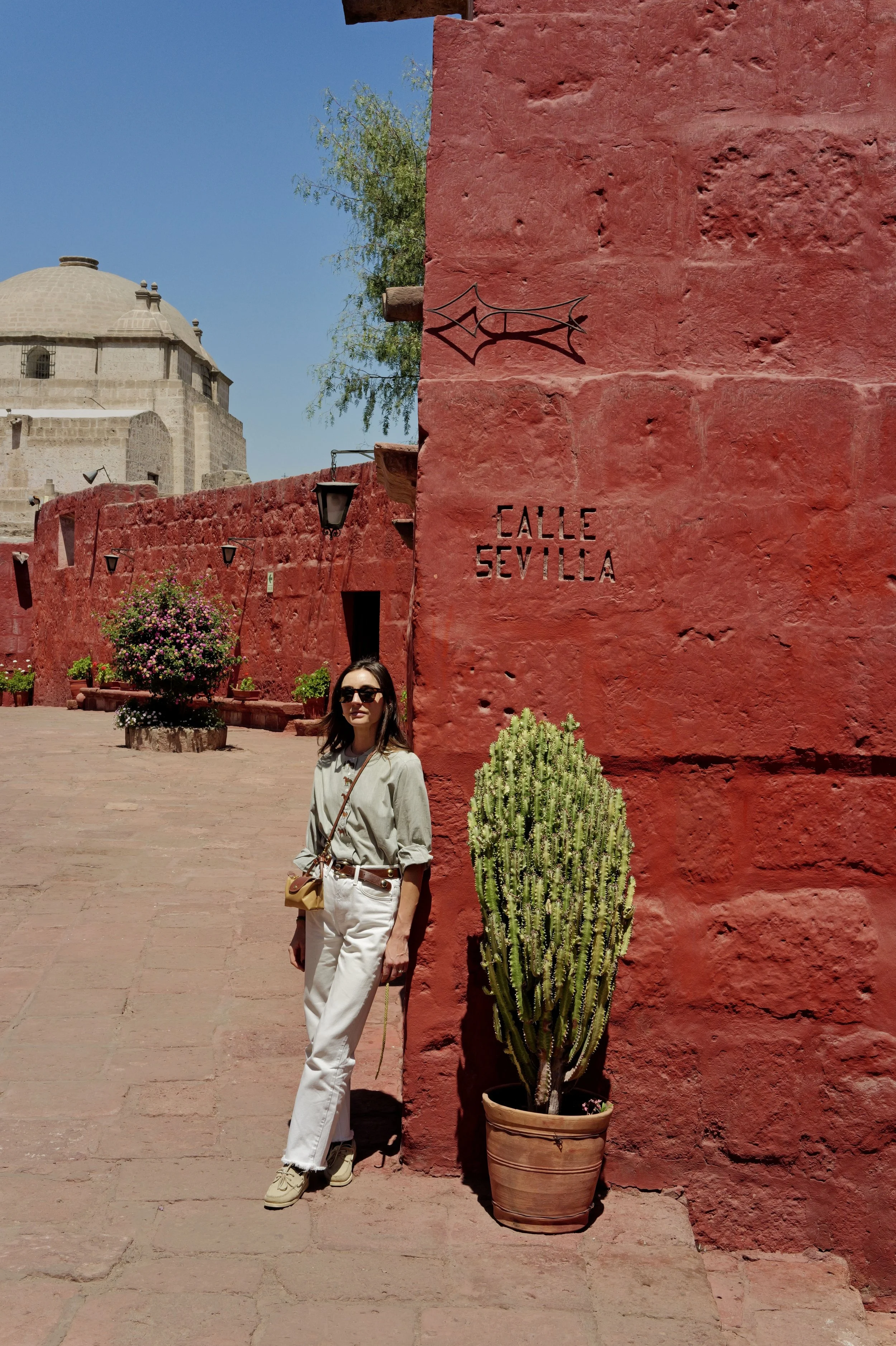
While walking around, make sure to stop at Plaza de Armas, in the historic heart of the city, to enjoy the beauty of the square itself, as of the twin-towered Cathedral soaring above it.
A few other places that deserve a quick stop are Alvaro Antiques and Libreria El Lector. Just next to it, Aleiana is a nice spot for a coffee before proceeding with your tour.
Proceed walking through the beautiful streets of Arequipa and plan a stop to Mundo Alpaca - a serene, hidden enclave in the San Lázaro district where you can observe traditional weaving arts and discover the heritage of Peruvian natural fibers, from alpaca to vicuña. It’s also a great place not only to buy finished garments, but also colorful alpaca yarn for those inclined to create their own.
On the next morning, make sure to save some time for the San Camilo’s Market - the main, historic traditional market in the heart of Arequipa. Located just a short walk from the city's Plaza de Armas, it serves as the culinary and cultural pantry of the city. You’ll be amazed by the colors, the flavors and the people. Stroll around and take time to observe the workers as well as the clients - the time will pass without you even noticing and it’ll just be amazing!
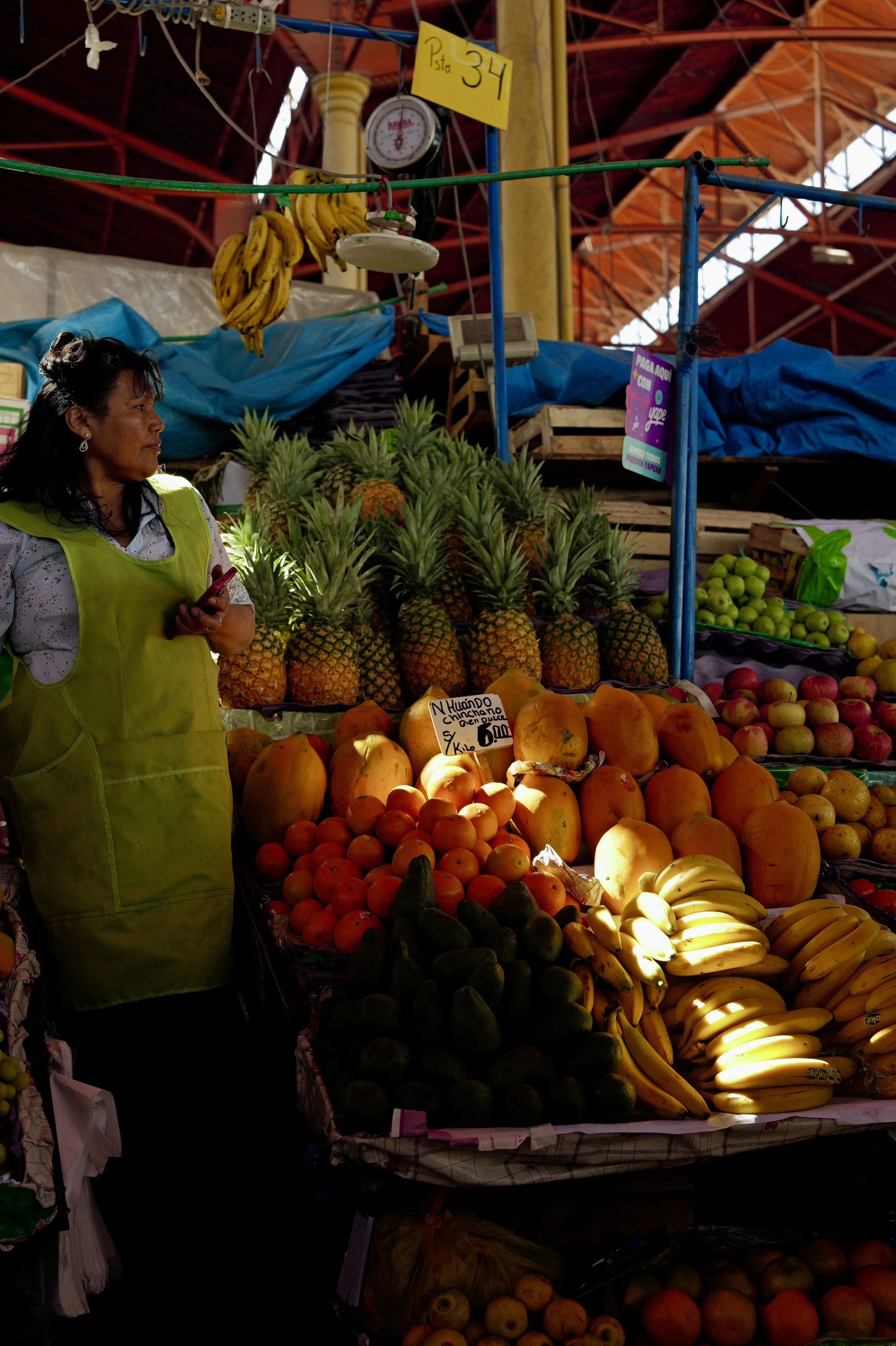
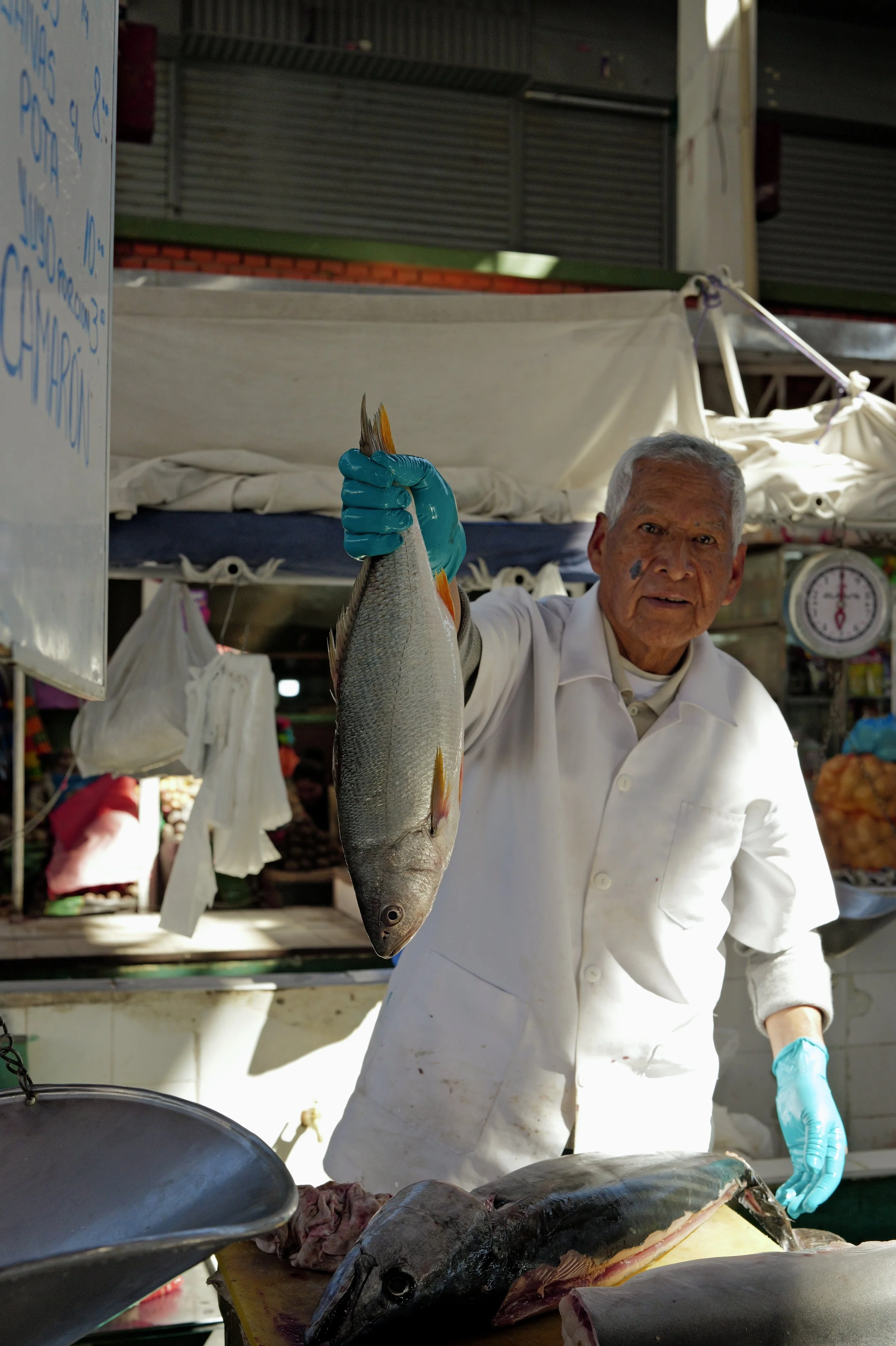
If you’re willing to enjoy a beautiful sunset with the best view over the city, walk 15 minutes until you reach Yanahuara, a scenic lookout famous for its ten white sillar stone arches overlooking El Misti - one of the three volcanos framing Arequipa. Once you’ve strolled around enough, continue to Carmen Alto, where you can enjoy stunning panoramas over the lush agricultural terraces of the Chili Valley.
For dinner, enjoy CIRQA’s beautiful restaurant.
Arequipa also serves as the natural prelude to the Colca Canyon, one of the deepest canyons in the world, that adds an essential layer to any southern Peruvian journey. The hotel will easily arrange the 3-hours transfer.
Day 5, 6 - Colca Canyon
Wake up early and enjoy your journey to the Colca. Honestly it’s hard to imagine a better place to stay than PUQIO - an intimate tented camp nestled in the heart of the canyon near the river valley. Blending rustic elegance with high-end comforts, it serves as an immersive base to explore the canyon and surrounding wildlife.
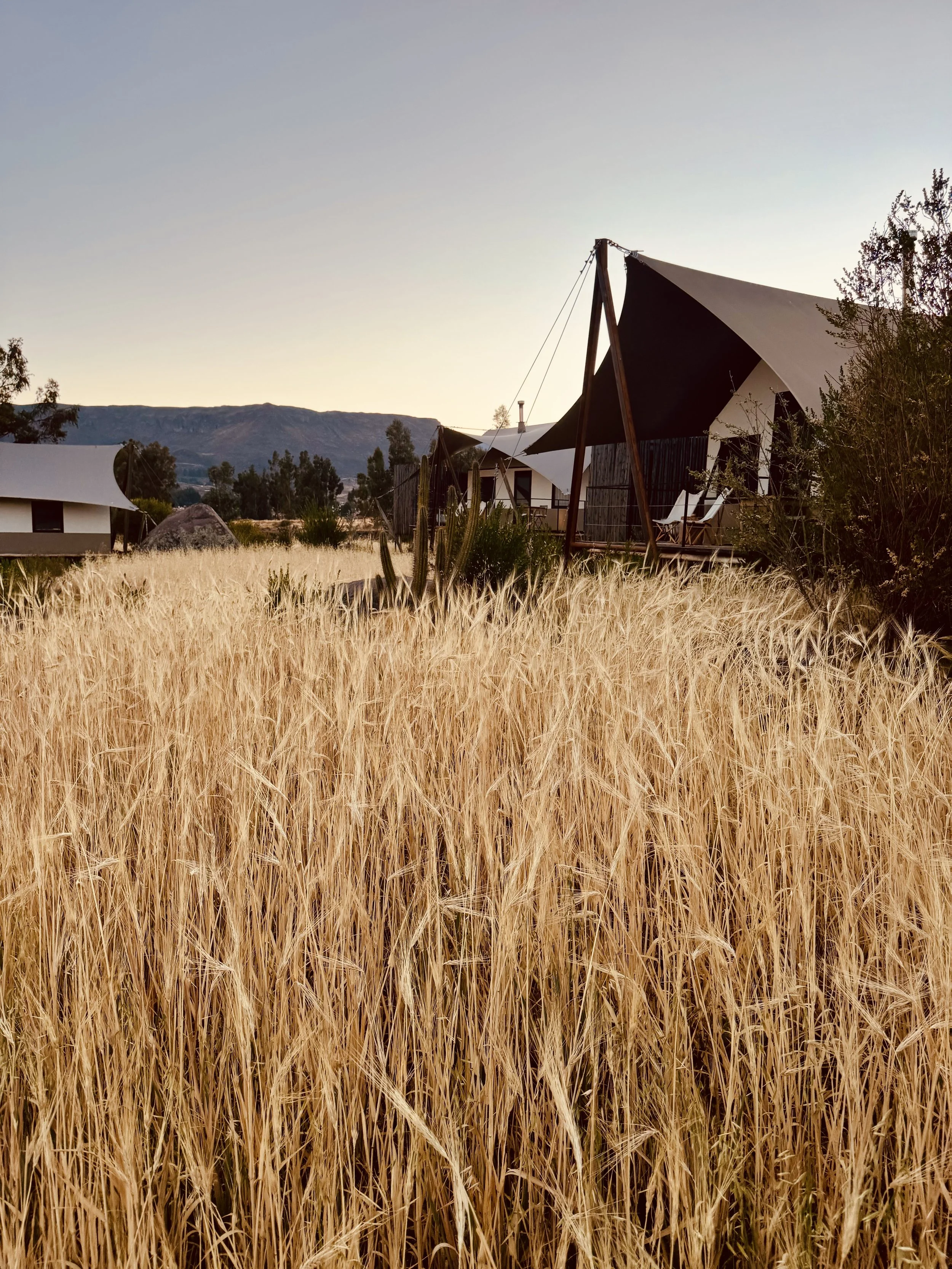
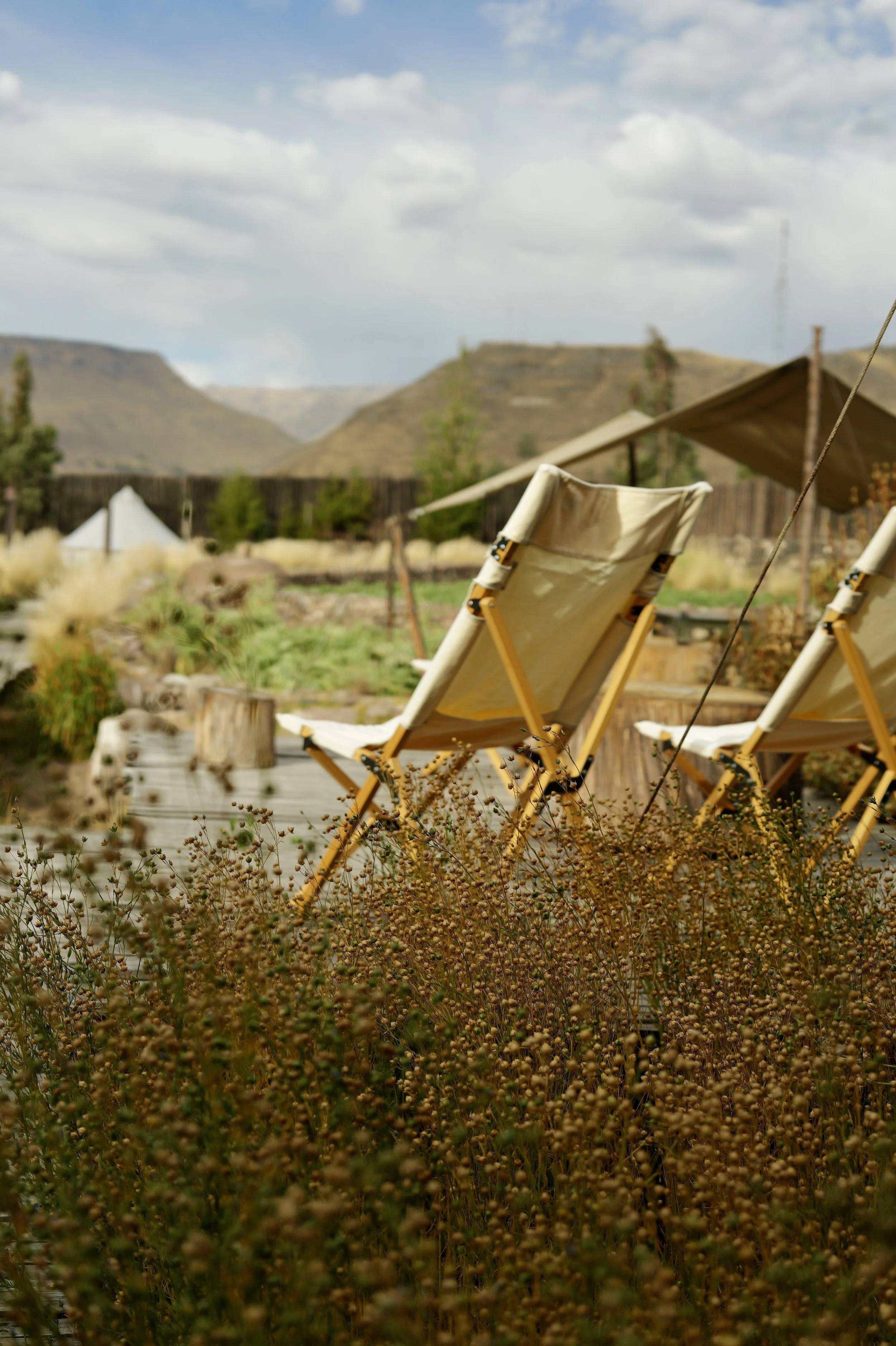
Carved by its namesake river, the Colca Canyon is one of the deepest on Earth, plunging over 3,100 meters at its lowest points. Often rushed through as a fleeting day trip, it is a landscape that truly demands to be savored at a slower, more intentional pace. Colca Canyon is a landscape carved by extreme contrasts, where volcanic peaks drop into fertile terraced valleys.
Enjoy the quiet rhythm of the valley floor walking through panoramic trails and horseback rides - believe us, horseriding here it’s just unmissable!
Set an early alarm and head out on a hike through untouched wilderness. As you walk, the rising light slowly brings the surrounding landscape into sharper focus, shifting the colors minute by minute and turning the trail itself into part of the spectacle. Once you reach the top, with a little luck, you’ll catch Andean condors gliding above the canyon. Waking up early is essential if you want a chance to see them - they rely on the warm air currents of the first morning hours to lift them effortlessly over the peaks.
At the end of the day comes the true reward: dinner at PUQIO, served in an intimate dining room thoughtfully set and softly lit for a slow, restorative evening - the ideal close to a remarkable day. Needless to say, the food itself is equally amazing.
Day 7-9 - THE Train ride from Arequipa to Cusco, while passing through Puno and Lake Titicaca
Here we come to one of the most incredible experiences of our lives! Arrange an early morning transfer to Arequipa in order to be at the train station in time for the Belmond Andean Explorer departure. You have three incredible days ahead of you.
Board the train keeping a small luggage or bag with you - you won’t need much and the cabins are beautiful but of course not huge - you’re still on a train. The rest will be stored for you and always reachable if needed.
Let yourself be impressed by the beauty of this original Australian train by 1994, re-engineered to trace the iron veins of the Peruvian Andes alongside sophisticated yet intimate service that’ll make you feel right at home for the entire journey.
Imagine yourself alone, immersed in the Peruvian Andes, on a 700-kilometer rail journey of pure magic.
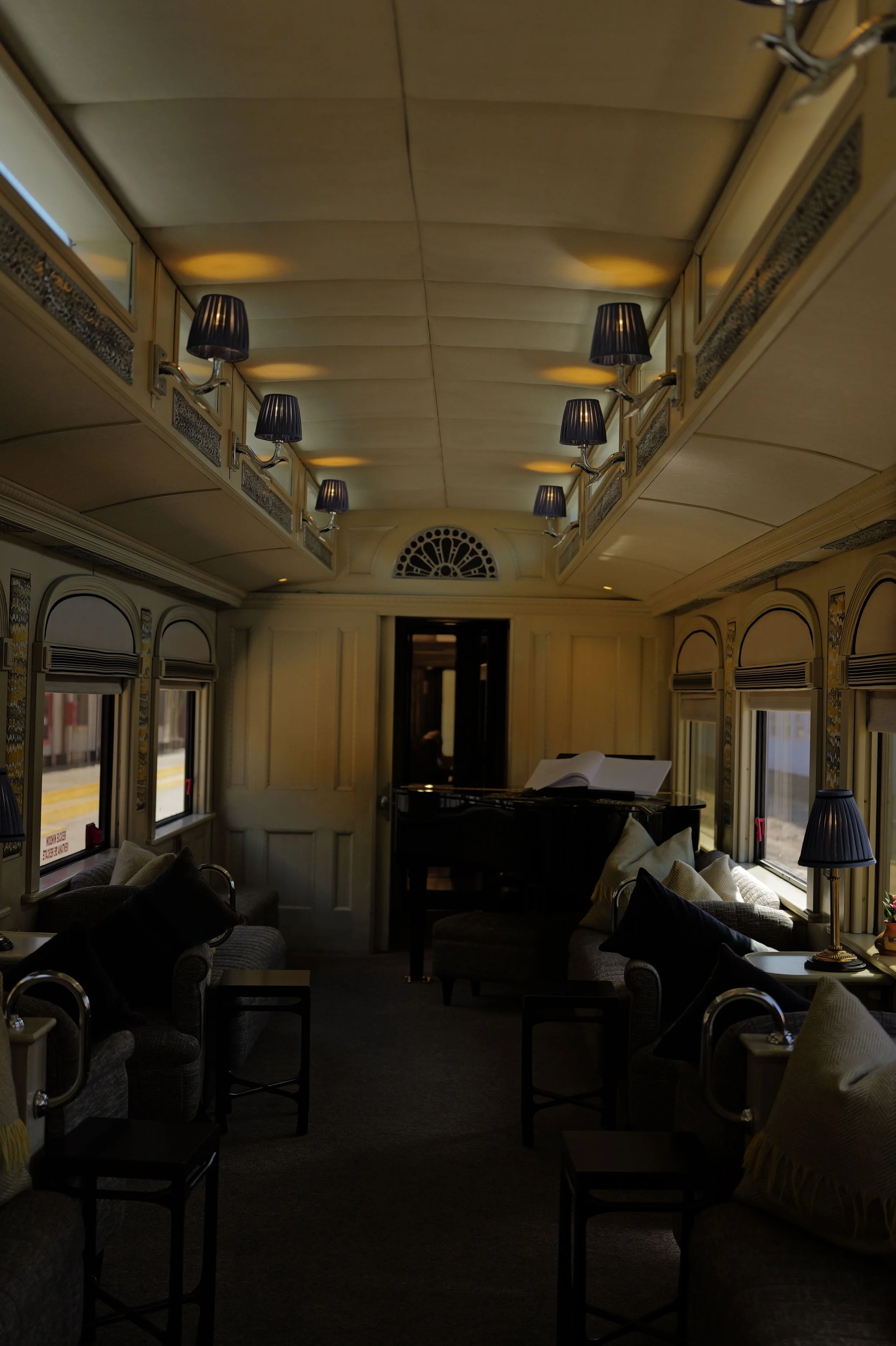
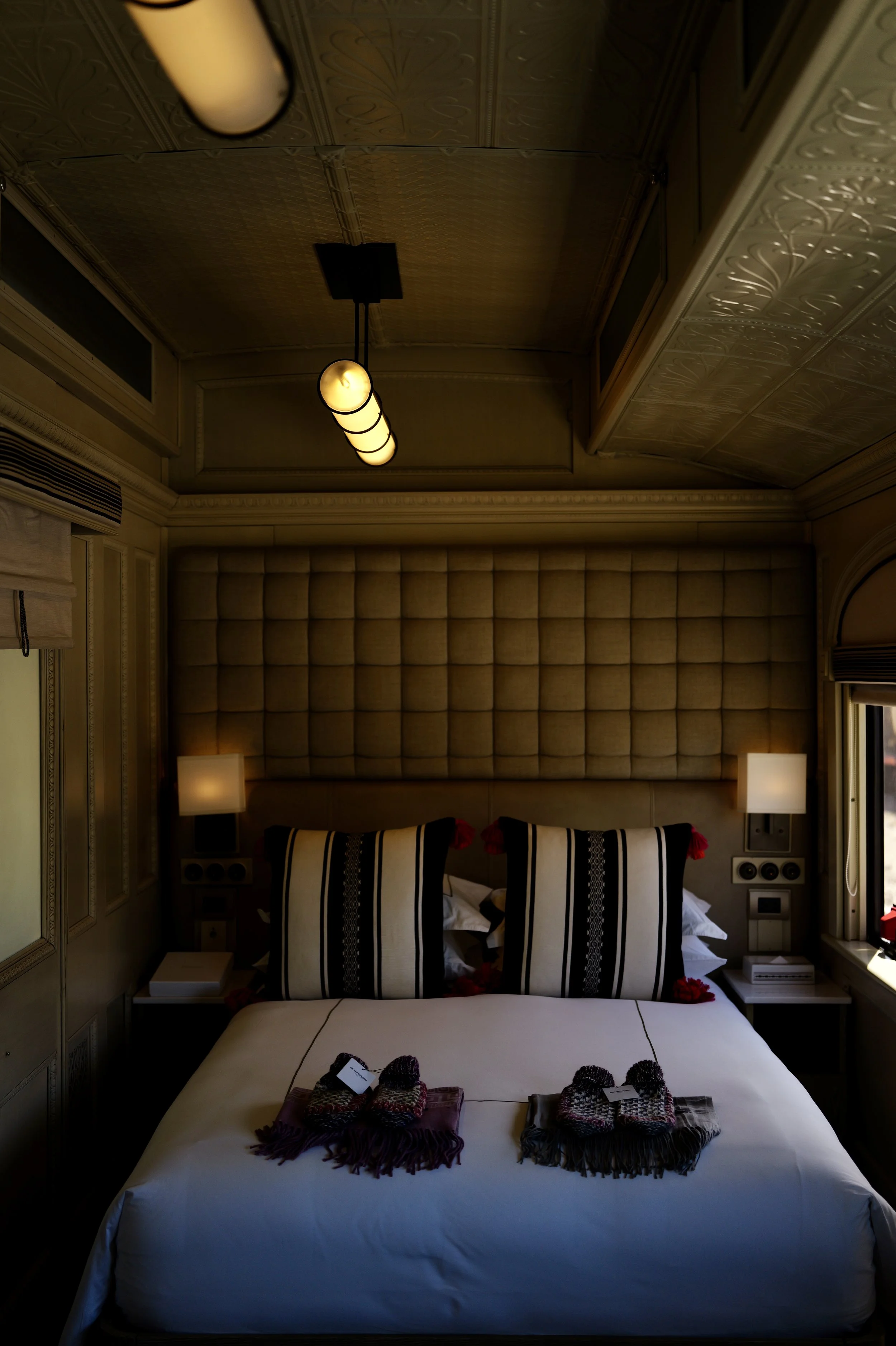
Make sure to enjoy and soak in every moment, best if watched from the open-air observatory car.
Departing from Arequipa, you’ll quickly reach an altitude of more than 4,000 meters, passing through pristine landscapes that’ll feel unreal. Here, with a little luck, you’ll catch sight of wild vicuñas moving freely through the silence.
Make yourself comfortable; The Journey has begun. Now, all that’s left to do is relax, take a seat in your preferred carriage and take in the scenery, the company, and the landscapes unfolding in front of you. Before you know it, sunset will arrive, turning everything into soft, warm pink.
After an amazing dinner and - why not - a good drink at the bar while listening to fantastic live music, you’ll fall asleep while the train is still moving, waking up in Puno’s train station, where you’ll enjoy a beautiful sunrise and breakfast before embarking towards Lake Titicaca.
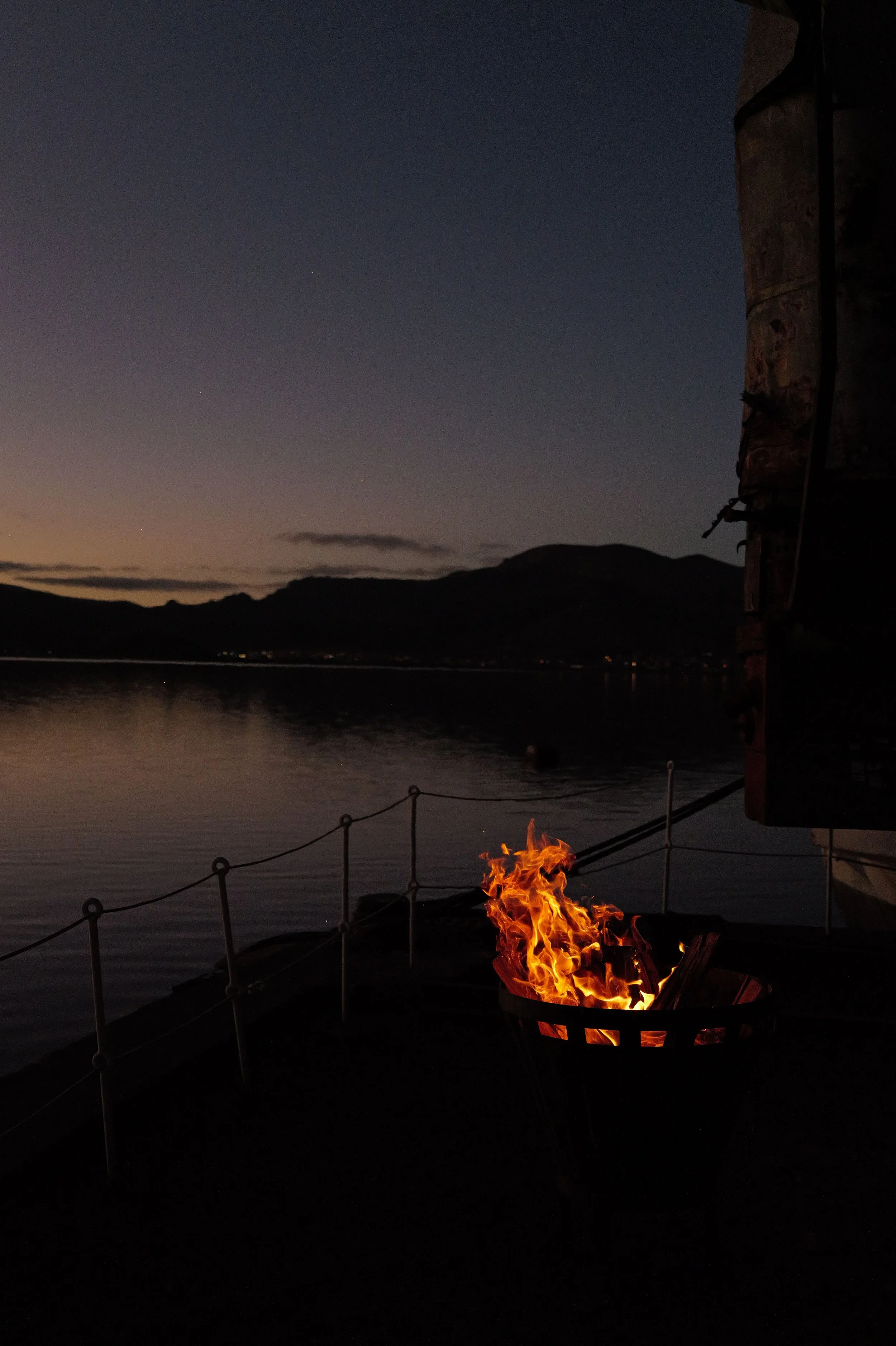
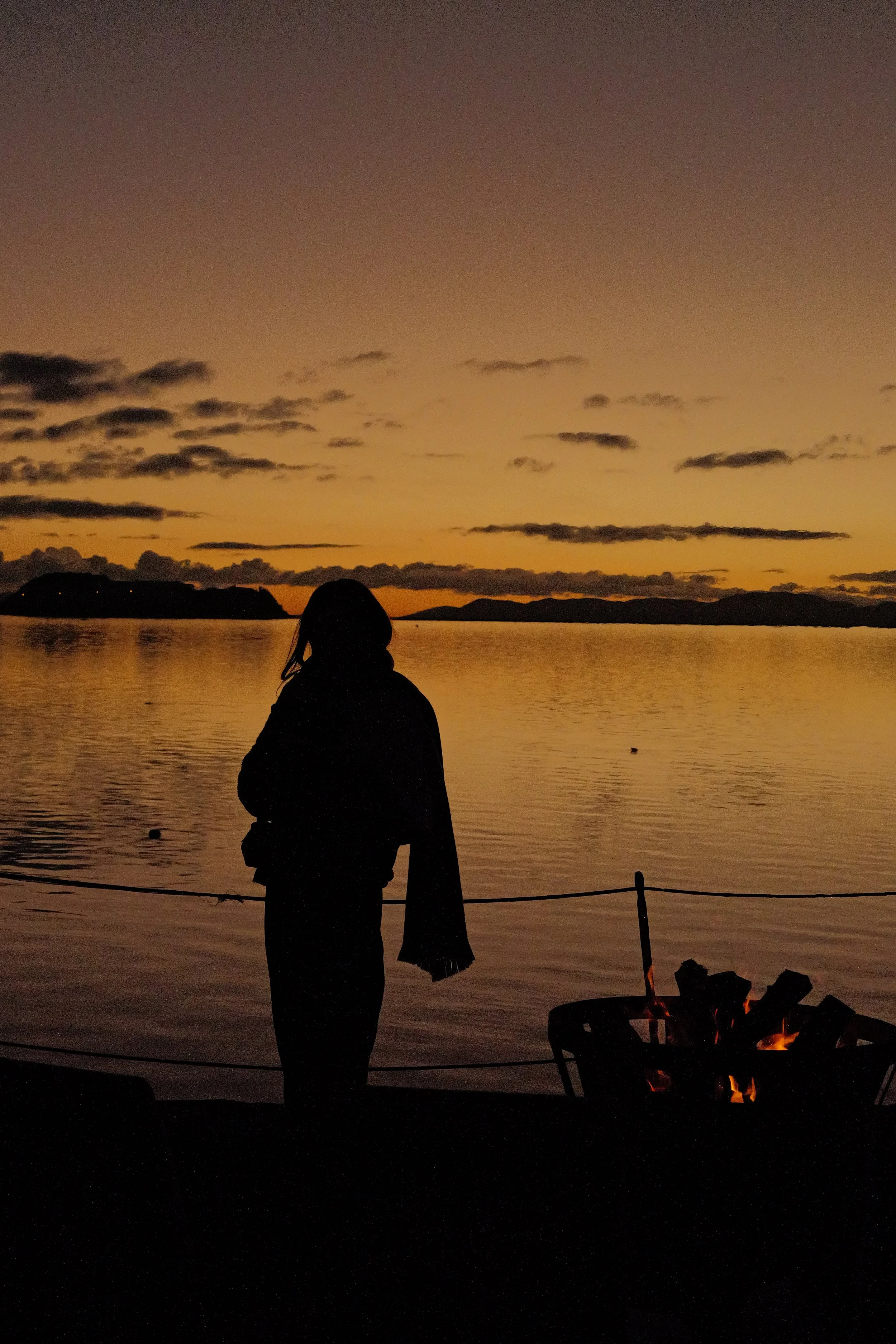
Straddling the border between Perù and Bolivia at 3,812 meters above sea level, Lake Titicaca is the world’s highest navigable lake. You’ll visit the floating islands and meet the people who still live here, who will walk you through the ancestral techniques used to build both the islands underfoot and the boats they rely on to get around, as well as what daily life looks like in this one-of-a-kind ecosystem.
Later, you’ll navigate until you reach Taquile - located roughly 45 kilometers offshore from Puno on the Peruvian side of Lake Titicaca, Taquile Island is a quiet, car-free highland island defined by ancient stone agricultural terraces, steep footpaths, and one of the most preserved textile traditions in the Andes. Unlike the floating reed platforms of Uros, Taquile is solid rock, rising to just over 4,000 meters above sea level with sweeping views across the deep blue water toward Bolivia’s Cordillera Real.
Here, you’ll rest on the beach, where an amazing lunch will be served. If you’re feeling brave, you can even take a dip in the lake’s cold yet crystal-clear waters.
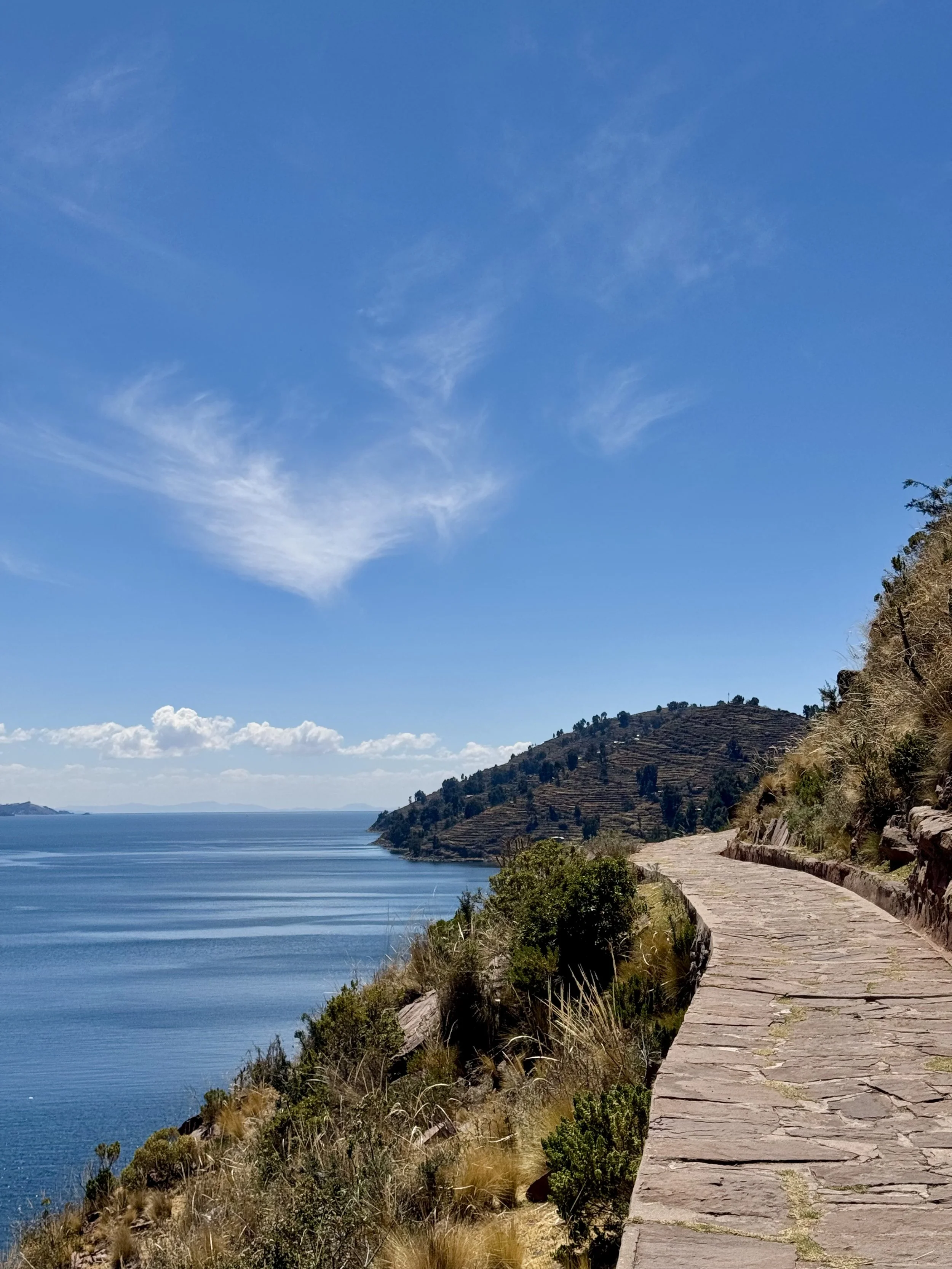
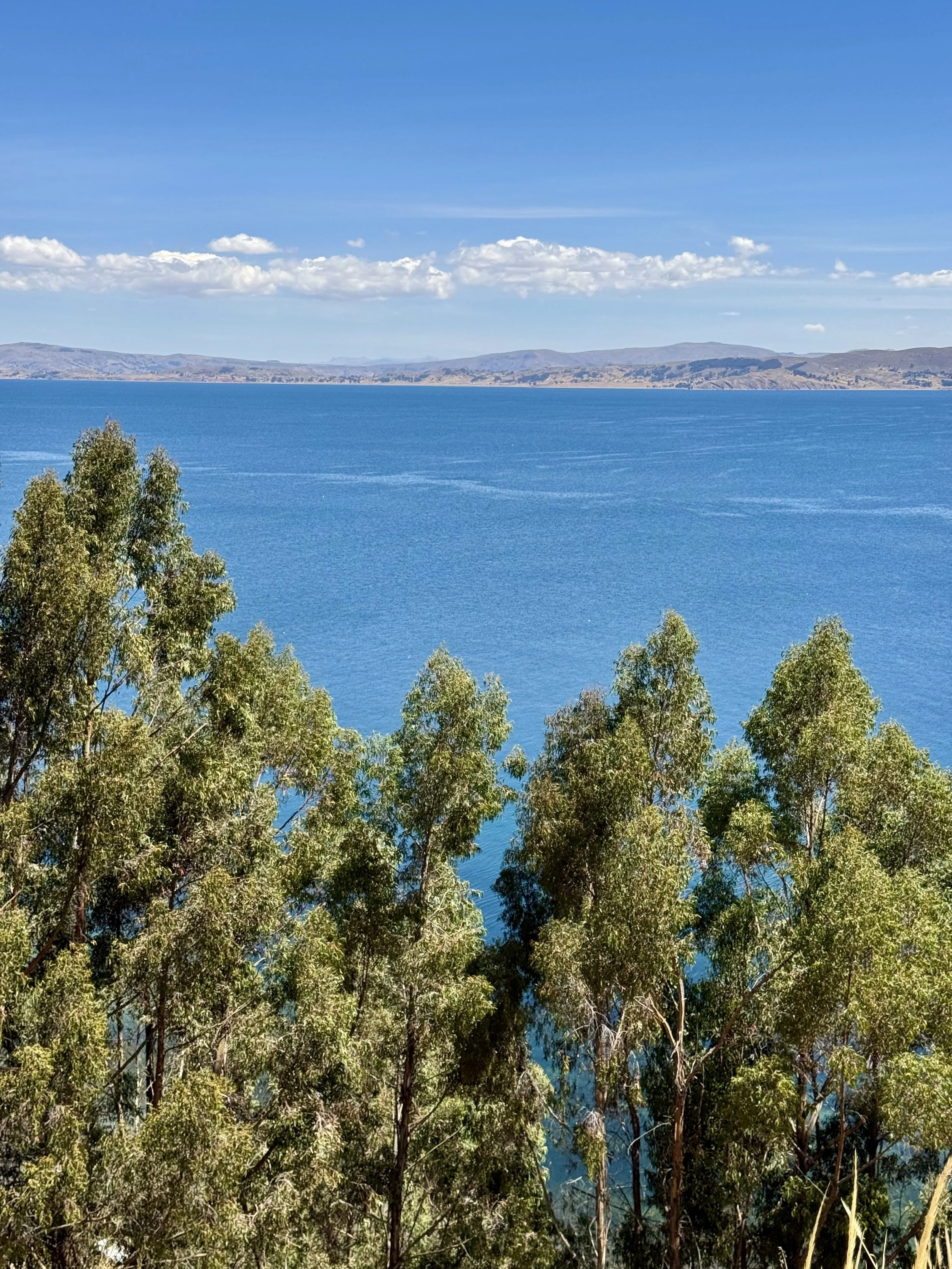
Heading back to the train, you’ll feel extremely grateful for all the beauty you’ve just witnessed! Take a warm shower and dress warmly to enjoy one of the most stunning sunsets of your whole life.
Later, another amazing dinner will be served in the restaurant car, followed by a drink and some good live music at the bar.
Wake up early and wear an extra warm layer to enjoy your morning coffee while looking at the sunrise from the observatory.
After a few hours, you’ll stop for the last time before arriving in Cusco for a quick hike above Raqchi, a major Inca archaeological complex that served as a vital religious, administrative, and logistical hub on the ancient Inca road network.
Once back on the train, enjoy the last hour’s ride and the amazing brunch served in the bar car. As the route follows the valley alongside the river, enjoy a glass of champagne and toast to the incredible days you’ve just experienced. On either side, other unforgettable landscapes will keep you company along the entire route.
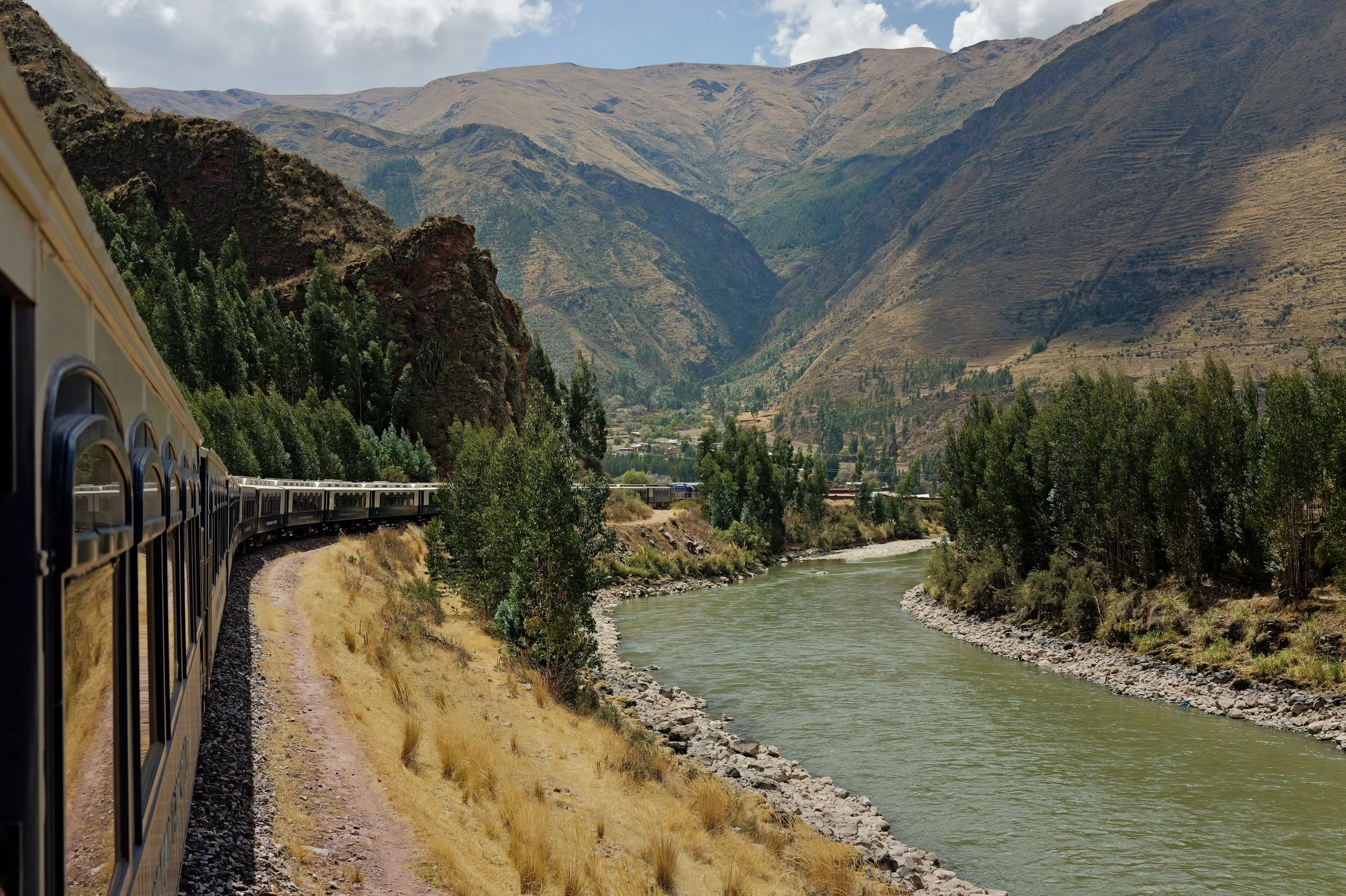
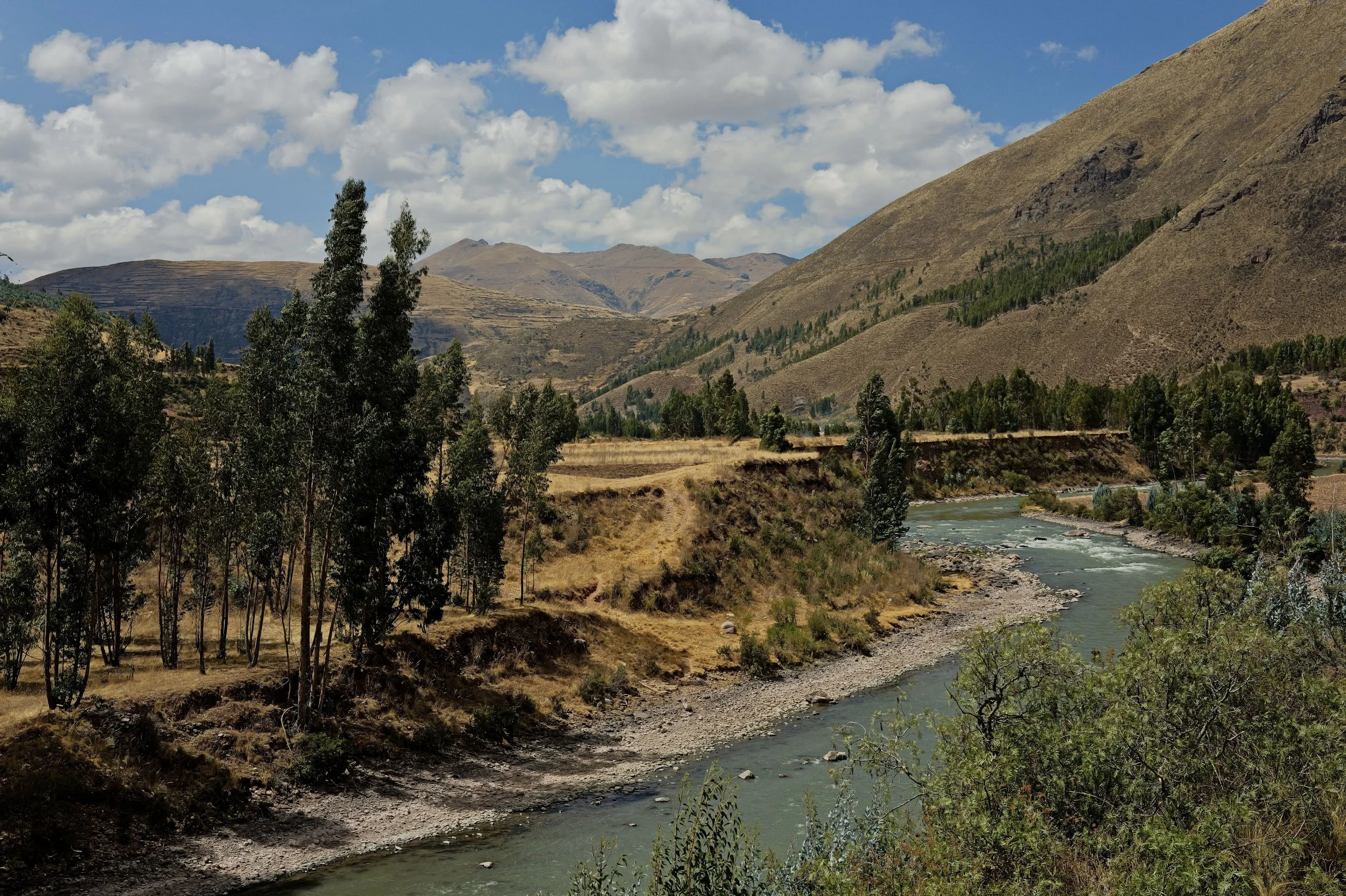
Just past noon you’ll arrive at Cusco train station and, sadly, it’ll be time to say goodbye to the train and the whole staff. There’s no chance you won’t be sad, but rest assured that the rest of the trip still has plenty of wonders in store.
Day 10 - Cusco, the navel of the world
You’ll find yourself in another different scenario: perched nearly 3,400 meters above sea level, Cusco is effortlessly one of Peru’s most unforgettable destinations. Plan a few days here to discover its beauty and use it as a starting point for exploring the unmissable surroundings - it’s no wonder that in Quechua, the native language, Cusco translates to the navel of the world - the ultimate sanctuary from which to venture out and discover breathtaking landscapes.
Dedicate the rest of the day to wonder around the city, walking through its cobblestone alleys that climb steeply above the city. Stroll through the bohemian neighborhood of San Blas to browse local artisan workshops, where you’ll find vivid, hand-woven textiles.
If you’re into good coffee, make sure to stop at Three Monkeys Coffee - not only for an exceptional cup, but for a closer look at the craft behind their roasting and brewing process, which is genuinely fascinating if you’re curious to learn more.
While walking around, you’ll find many travel agencies; stop at one or more of them and book the transfer for the next days’ hiking - our recommendations are Humantay Lake and Rainbow Mountain. We suggest you book a private driver - even if it costs more than a group tour, it’s honestly priceless to have the freedom to set your own departure time. Not only does this tailor the schedule completely to your needs, but it also lets you beat the crowds and experience both the trail and the scenery in near-total solitude, offering a far more peaceful and exclusive view.
Enjoy an early dinner at Oculto - a hidden gem in the historic center of Cusco, offering an elevated dining experience away from the busier tourist hubs. It was by far one of our favorite restaurants in Perù!
Plan to go to bed early - your alarm will be set before sunrise, and it’ll be completely worth it.
If you’re willing to do both the hikes, we suggest you start with Humantay Lake, and leave the the breathtaking views of Rainbow Mountain as a farewell to the city, but of course it also depends on the weather forecast - save the best day to fully enjoy the shades of one of the most famous mountains in the world! But be aware that the clouds will run quickly and the weather changes just as fast.
Day 11 - Humantay Lake
After breakfast and a much needed coffee, you’re ready to meet your driver for a 3 and a half hours car ride that’ll take you to Soraypampa, starting point of the hike. Be sure to ask the hotel for some sandwiches and water to take with you.
The walk is around 1.5-2 hours and starts relatively flat, but quickly transitions into a persistent, steep climb - there are only 300 meters of elevation gain, but you’ll feel each and every one of them. The terrain is loose gravel, dirt, and stone steps - be sure to have suitable shoes! Because of the thin air, you’ll feel the burn quickly - slow, steady pacing is essential. Local horse handlers often operate along the lower two-thirds of the trail for those needing transport up, though the final rocky stretch to the ridge must be done on foot.
The lake is at 4,200 meters and remains entirely hidden until you top the ridge. Unveiling itself suddenly at the top, the bowl of turquoise water sits directly beneath the face of Nevado Humantay. You can walk along the left ridge for elevated viewpoints or head down closer to the shore - take time to enjoy the well deserved view and merge with the pristine nature. Note: Swimming is strictly prohibited to preserve the delicate glacial ecosystem.
Once you’ve had enough and have fully recharged, walk your way back to the base camp - it’ll only take 45-60 minutes to go down.
Head back to Cusco, have some rest and once you feel restored, have a walk to the market. Located just a few blocks southwest of Cusco’s Plaza de Armas, Mercado Central de San Pedro is the city’s oldest and liveliest covered market - a sensory experience of flavors, colors and local life, housed beneath a soaring iron-and-glass roof designed in part by Gustave Eiffel in the early 20th century.
Before it gets dark, head to San Blas Viewpoint - from the terrace, you get a front-row view of Plaza de Armas and the historic roofline. At sunset, the terracotta tiles turn into a deep red, framing the golden tones of the surrounding Andes.
It’s time for a nice dinner and a good night’s sleep - tomorrow will be even more challenging!
Day 12 - Rainbow Mountain
Set the alarm as early as you see fit for yourself - but try to make the effort to leave Cusco by 4.30pm at the latest. We know it sounds crazy but, believe us, being on top of Rainbow Mountain on your own (or almost) is an experience beyond compare.
You’ll have another 3 and a half hours car drive ahead of you, which gives you time for a little extra sleep.
Perched at 5,200 meters above sea level, Vinicunca - famously known as Rainbow Mountain - is one of Peru’s most surreal high-altitude landscapes. Formed over millions of years by weathering, trace mineral deposits, and tectonic uplift, its iconic bands of deep red, gold, turquoise, and violet is just something you’ll never forget - and you’re about to see it for yourself!
The wide trail rises steadily through an alpine valley filled with alpacas, llamas, and snow-capped views. Although gentler than the Humantay Lake trail, the 4,600-meter starting elevation makes the climb demanding. Local horse rides are available along the valley floor, but the final ascent to the ridge must be done on foot.
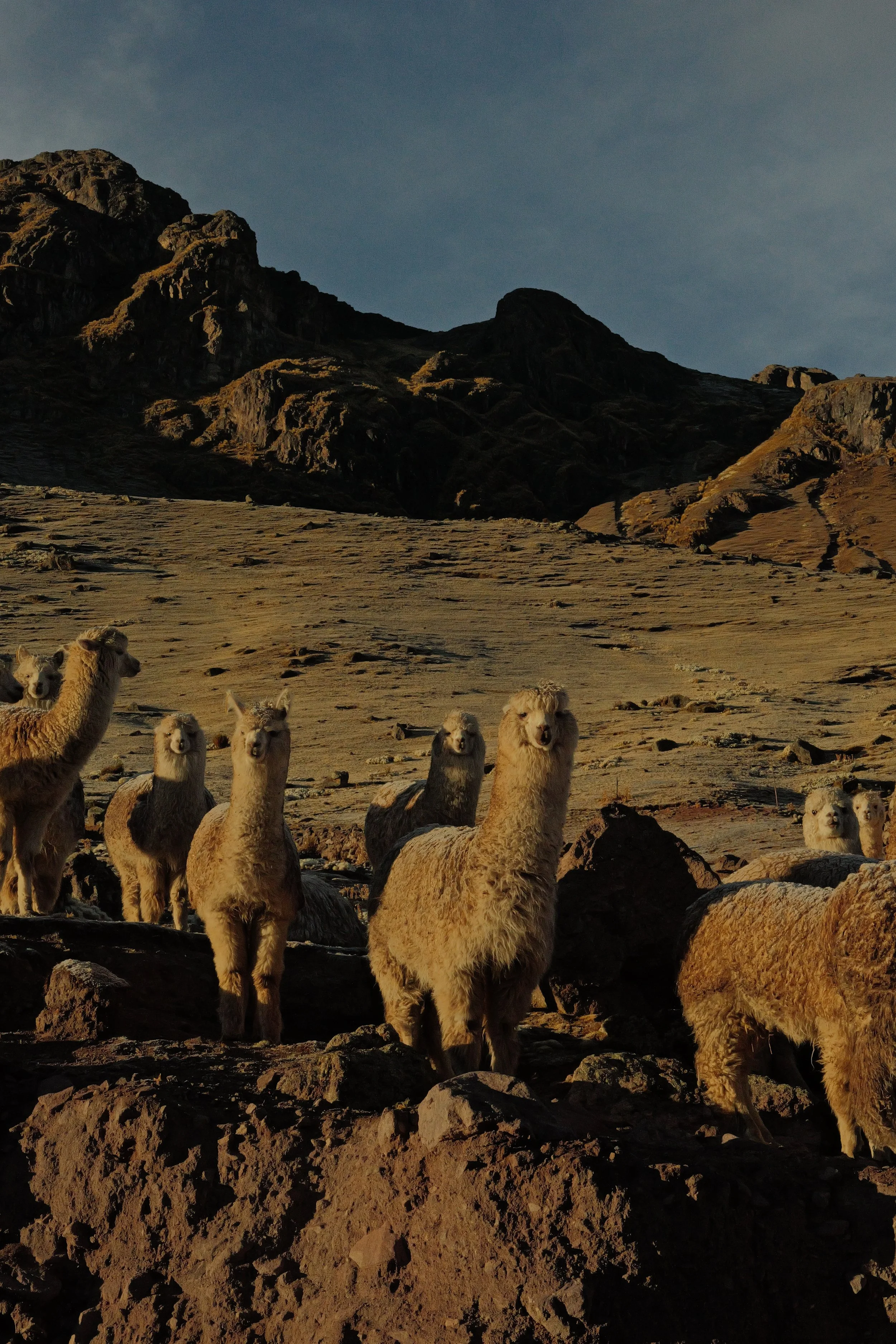
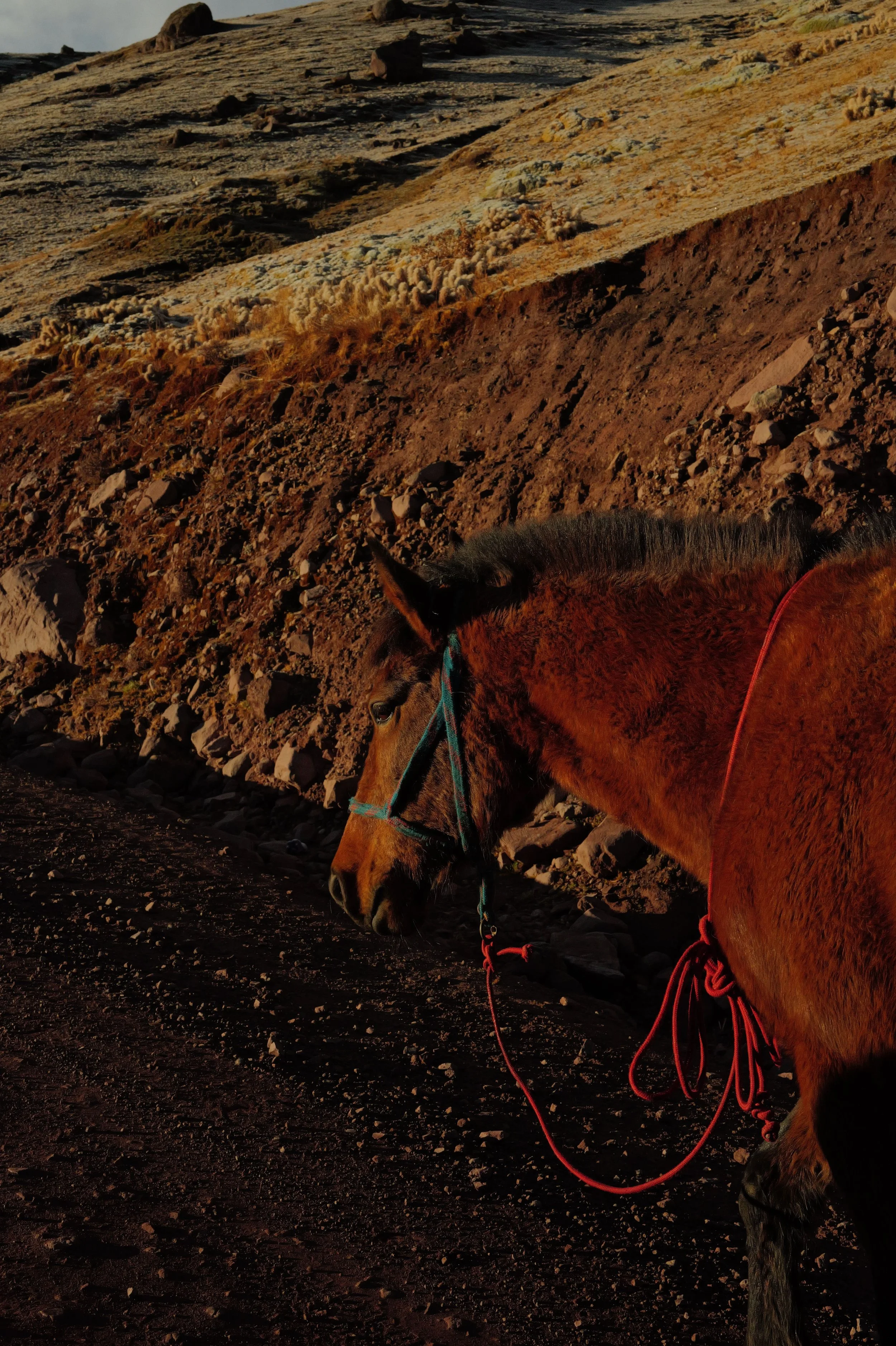
Vinicunca’s famous stripes remain partially hidden until you reach the main viewing ridge. Once you top the crest, the full, vivid shades of Vinicunca unfolds right across the valley - you won’t believe that the magic in front of you is actually real! If you’ve started your hike very early, you’ll probably be almost alone on top - no words can describe the feeling, both magic and surreal! Take time to rest, enjoy the dreamlike beauty in front of you and let it sweep you away.
If clouds wrap around the mountain as you arrive, or moments later, hiding it entirely from sight, don’t lose heart: simply wait it out. Driven by strong winds, the mist moves quickly at this altitude, and out of a wall of pure white, the colorful peak often reappears in crystal clarity right in front of you.
While you’re on top, you’ll find something to eat and drink and, if you’re lucky enough, some local school groups that sing and dance - an unexpected yet incredible show!
In a few minutes, the crowd will probably arrive. To escape it and take in a far wider perspective, keep following the upper trail into the Red Valley (Valle Rojo) - a striking landscape of deep red earth that sees far fewer visitors.
When you think is the right time, start descending to the parking - it’ll take approximately one hour.
Heading back to Cusco, don’t panic if a strong headache hits you - it’s because of the altitude and the thin air. Once back at the hotel, take a warm shower and a nap, it’ll pass soon.
For your last dinner in Cusco, book a table at Mauka - tucked within the historic walls of Palacio Nazarenas, the restaurant offers an intimate, highly curated exploration of Andean biodiversity, merging high-altitude ingredients with contemporary culinary craft by chef Pía León (recognized as the World's Best Female Chef in 2021).
You’re now officially ready for your next stop.
Day 13 - Sacred Valley
Even if the past few days have been pretty intense, try to leave Cusco in the early morning, to have time to stop in Chinchero (50 minutes by car from Cusco) and Moray (40 minutes from Chinchero), while heading to MIL for lunch. Have a light breakfast to be sure to fully enjoy the lunch experience.
Chinchero - perched at 3,760 meters, it’s an historic mountain settlement defined by deep-rooted Quechua traditions and broad Andean views.
Moray - framed by snow-capped peaks, it’s an extraordinary series of sunken amphitheaters carved into a limestone plateau. These concentric circular terraces create distinct microclimates, with temperature shifts of up to 15°C between the top and bottom rings. Used by the Incas as an open-air agricultural laboratory to breed and adapt crops, Moray stands as one of the empire's most striking engineering achievements.
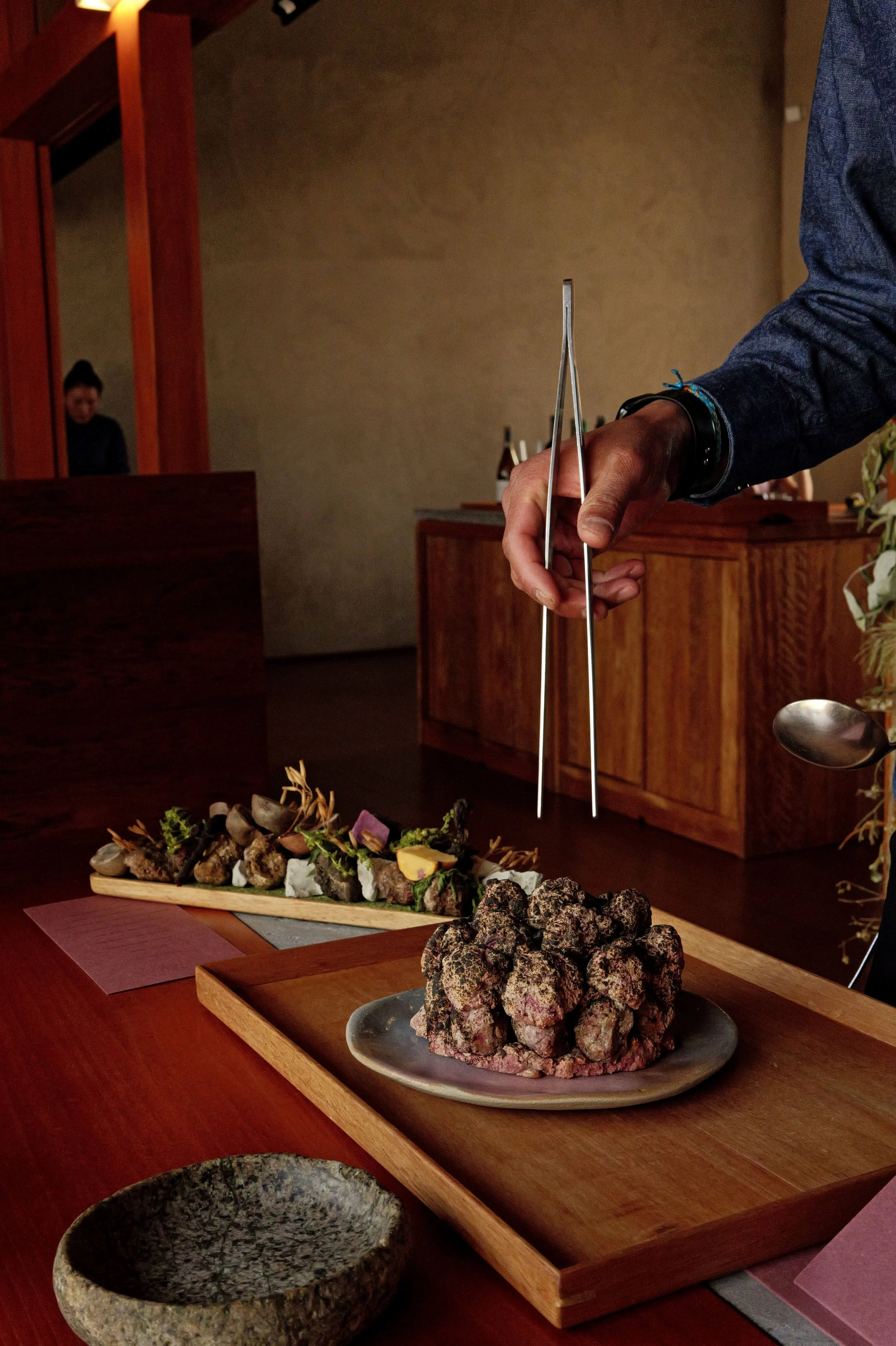
It’ll be lunchtime by now and you should have reached MIL Centro, whose culinary experience is just one of a lifetime - a real multi-sensory exploration of Andean biodiversity, landscape, and heritage! Seated at 3,560 meters directly overlooking the concentric ruins of Moray, MIL Centro - conceived by chef Virgilio Martínez - is an immersion into high-altitude gastronomy. More than a restaurant, it operates as an agricultural research center in partnership with neighboring Indigenous communities.
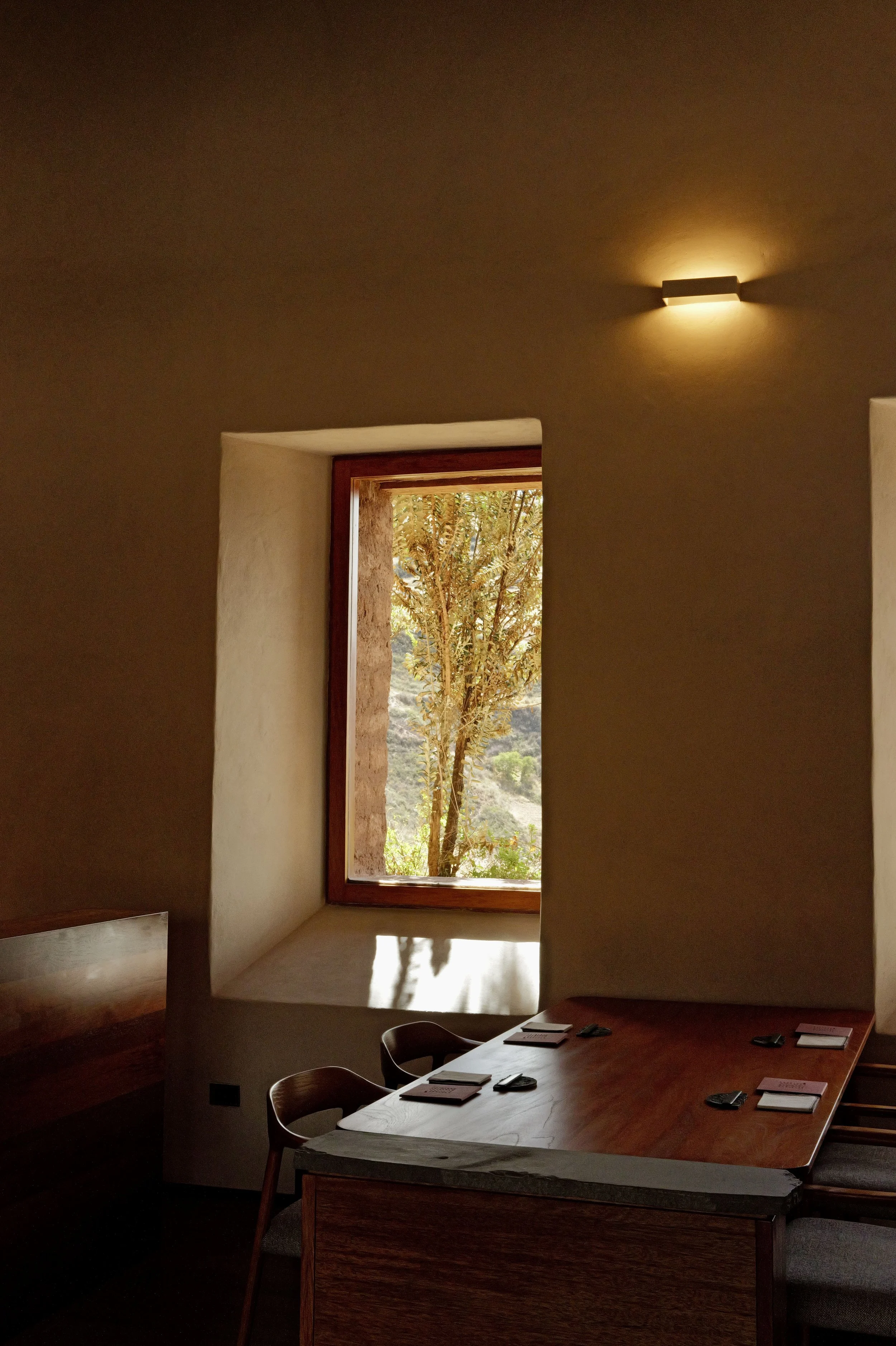
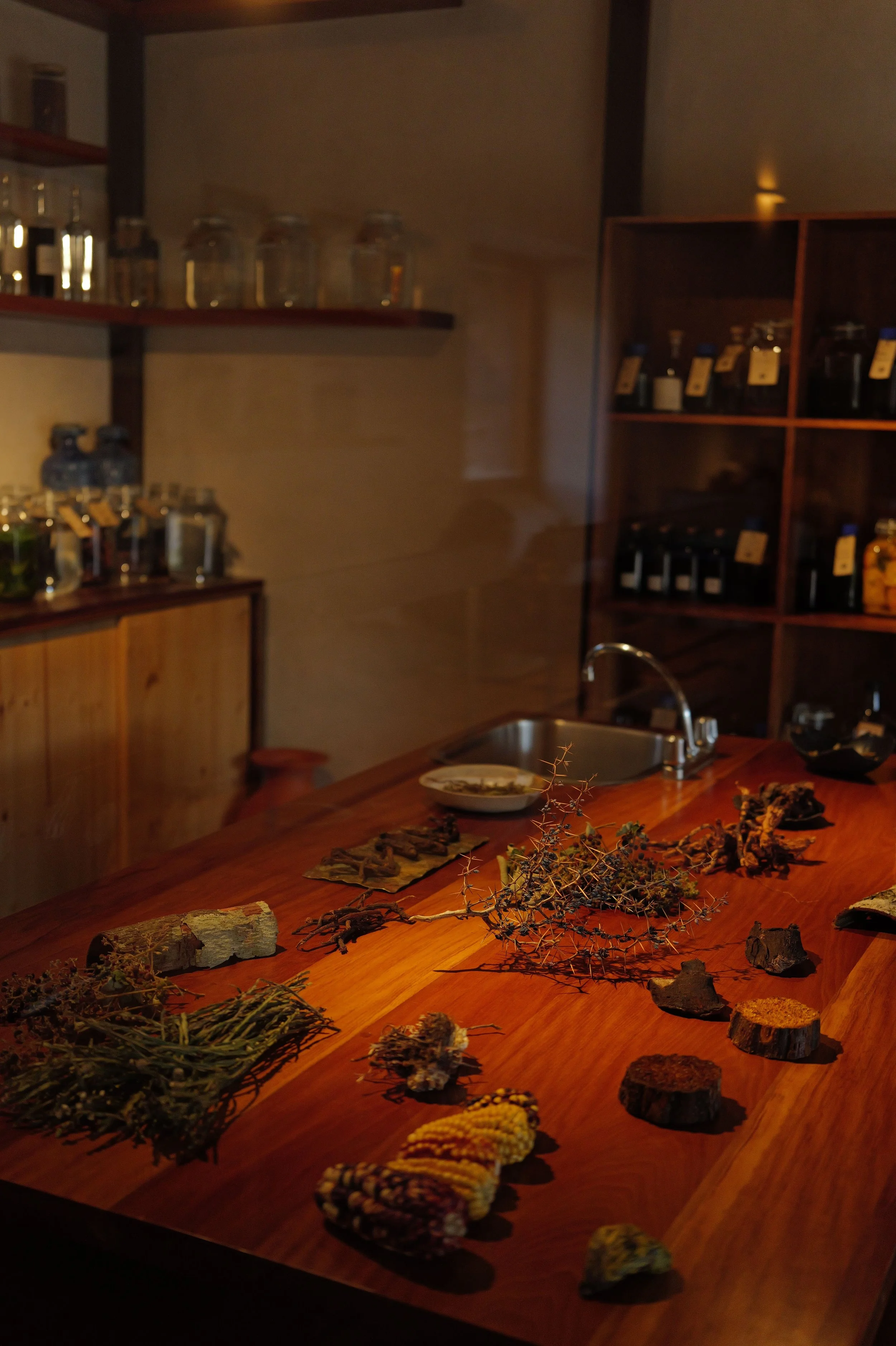
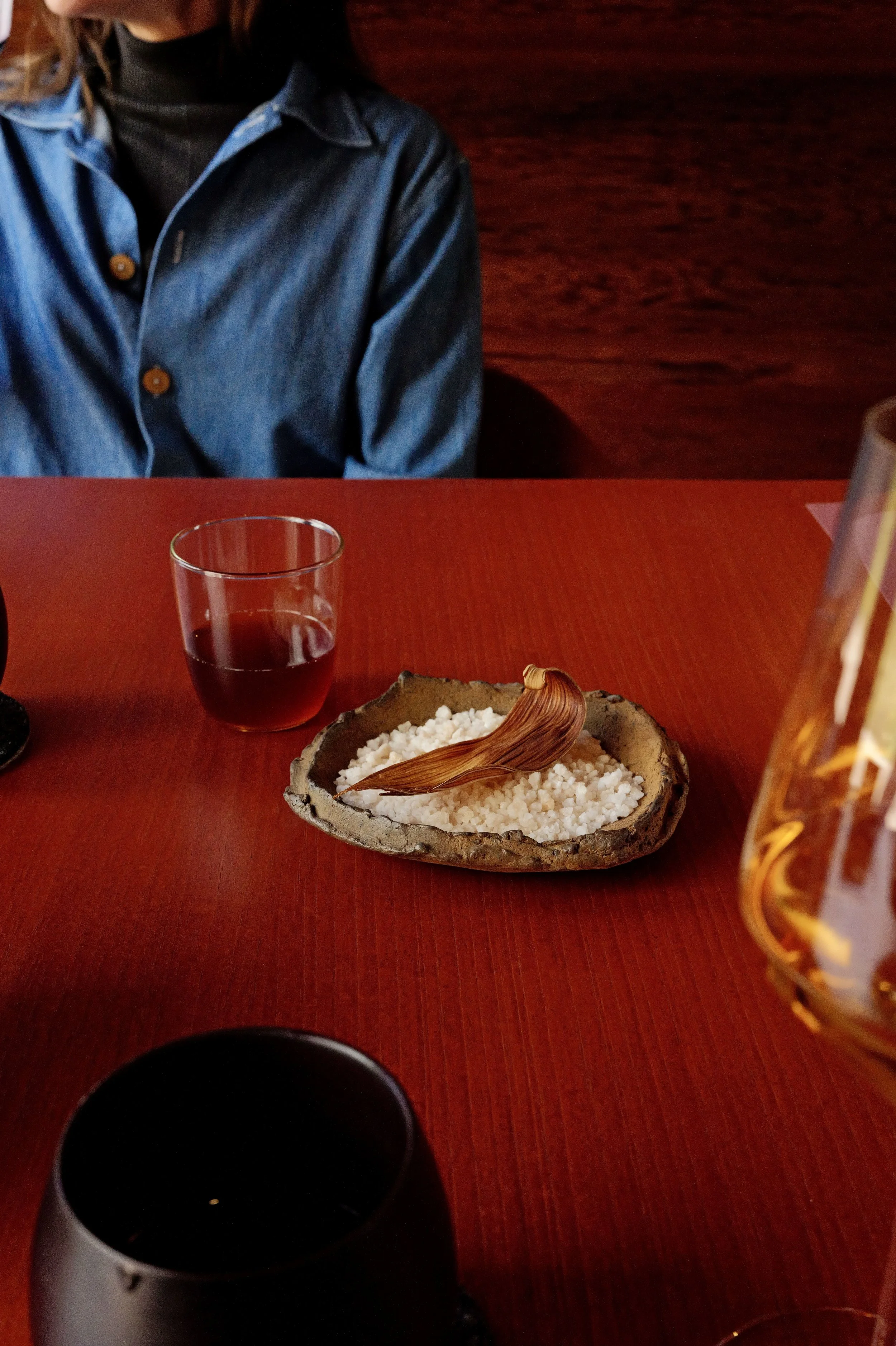
The dining experience centers on an eight-course tasting menu, where every dish is sourced entirely from surrounding ecosystems above 3,000 meters. Ingredients range from high-Andean tubers, ancient grains, and wild herbs, to alpaca and native clays, prepared using both modern techniques and traditional huatia ovens.
Proceeding to Ollantaytambo, where we suggest you sleep, plan a stop to the Salineras de Maras, located 30 minutes from MIL. Tucked into a narrow canyon, the salt pans of Maras form a geometric landscape of over 3,000 terraced pools. Fed by a warm subterranean saline spring, the pools have been harvested manually by local families since pre-Inca times. As the water evaporates under the sun, it leaves behind a patchwork of white, cream, and amber crusts that contrast sharply against the rugged red earth. While enjoying the place, you’ll probably witness some workers collecting the salt and moving the water around the pools.
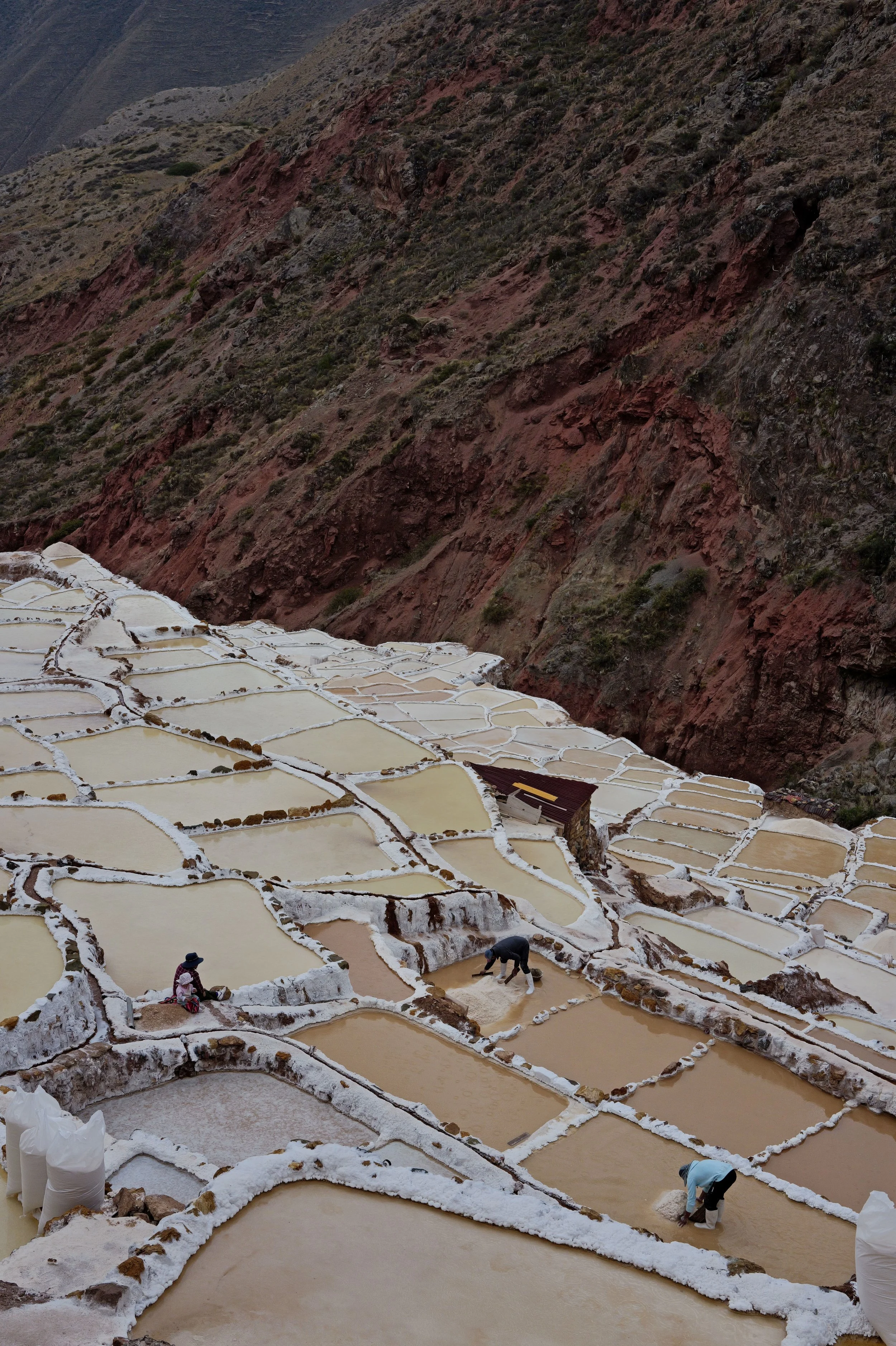
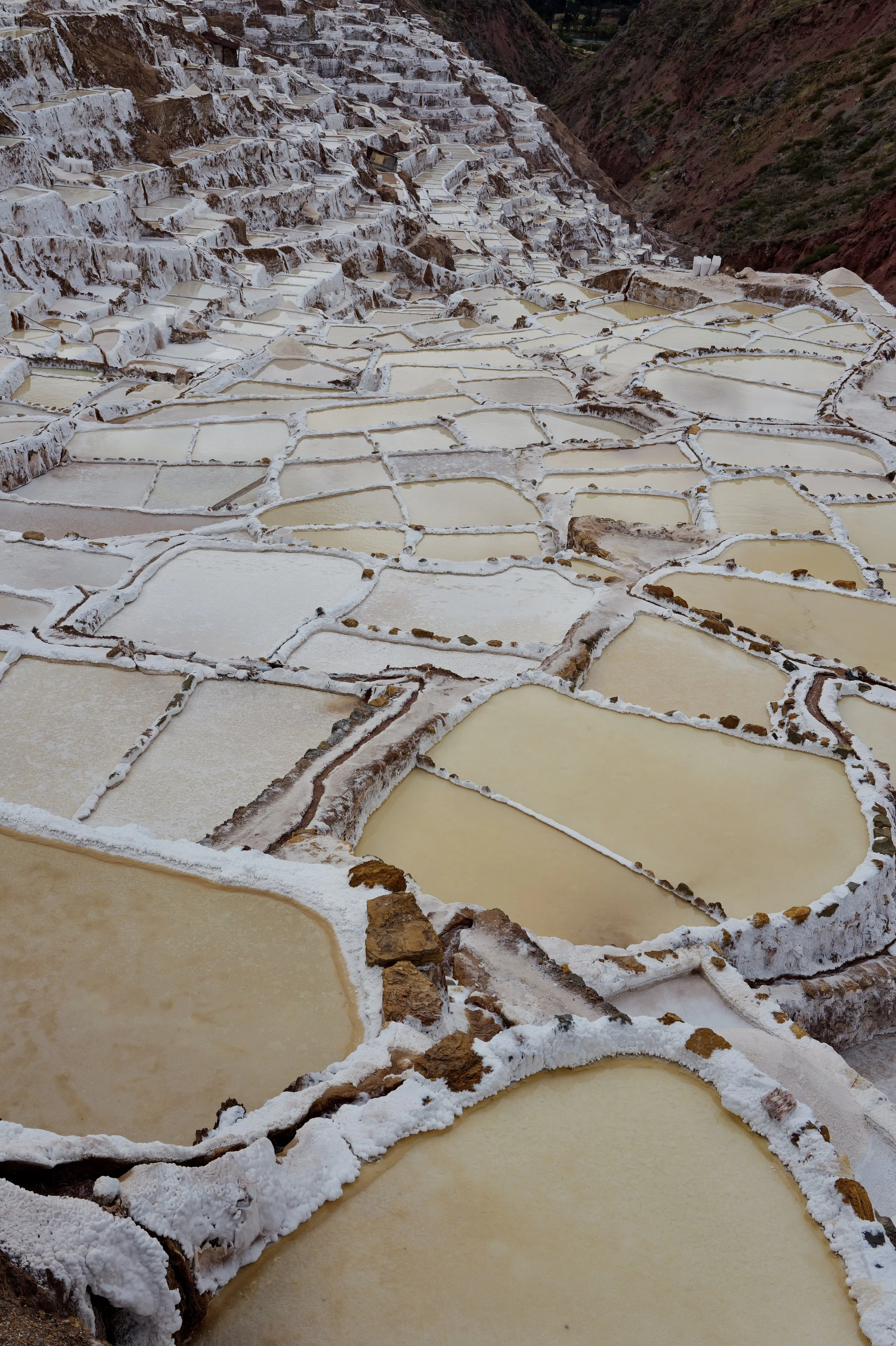
Rest in the car for the last hour that’ll take you to Ollantaytambo, where you’ll have time to chill and soak in all the beauty of the day!
Beyond its historical significance, Ollantaytambo serves as the primary gateway for journeys toward Machu Picchu. We definitely suggest you take two days there - believe us, after the first visit of Machu Picchu, you’ll want more!
We decided to stay just outside the historic town at Las Qolqas EcoResort, which offers a quiet alternative to standard Sacred Valley hotels - and one we recommend. Set in a secluded valley, the property consists of individual wooden cabins nestled among native gardens and rushing streams, each with a private porch and a wood-burning stove. Days here revolve around simple pleasures: garden-sourced meals, afternoon sauna sessions, and hummingbirds outside your window - the ideal way to feel restored and recharge your energy ahead of Machu Picchu.
Day 14 - Arriving at Aguas Calientes
Before taking the train to Machu Picchu, allow yourself up to an hour to walk around Ollantaytambo, the empire’s last surviving living town, where original Inca urban planning, foundations and stone water channels remain entirely intact. Stroll around the narrow cobblestone streets and admire the monumental stone terraces and the sun temple fortress.
Enjoy a coffee at Latente, and you’re good to go!
There are three main train providers that in 1 hour 30/1 hour 45 take you from Ollantaytambo to Aguas Calientes - the small village at the base of Machu Picchu: Inca Rail, PeruRail and Belmond Hiram Bingham - book the one that best suits you.
Once in Aguas Calientes, check in at your hotel and, before resting, go to the travel agency to book the bus tickets for the upcoming morning. If you’re willing to greatly experience one of the Seven Wonders of the World, we highly recommend you take the first bus at 5am, better if going at the bus stop 15/20 minutes in advance to be sure not to miss it.
Honestly speaking, there’s nothing worth visiting in Aguas Calientes. This small village was only created as a tourist stop for those willing to visit Machu Picchu. A great excuse to have an early dinner to be completely ready to enjoy the next day.
Day 15, 16 - Machu Picchu
It’s 5am, you’re departing with the bus, and you've likely been up for more than an hour already. No panic, the bus ride will start rewarding you!
The bus ride from Aguas Calientes to Machu Picchu takes about thirty minutes along a steep, winding mountain road.
As the vehicle ascends, the heavy humidity begins to lift, gradually revealing the thick green vegetation that lines the entire route up to the citadel.
Regardless of your ticket, after the entering queue make sure to quickly walk to the upper terrace to arrive among the first and enjoy the stunning view in near solitude. If you are lucky, the clouds will slowly begin to part, gradually revealing the wonder below. Don’t rush it, take your time, get comfortable, and enjoy the vista.
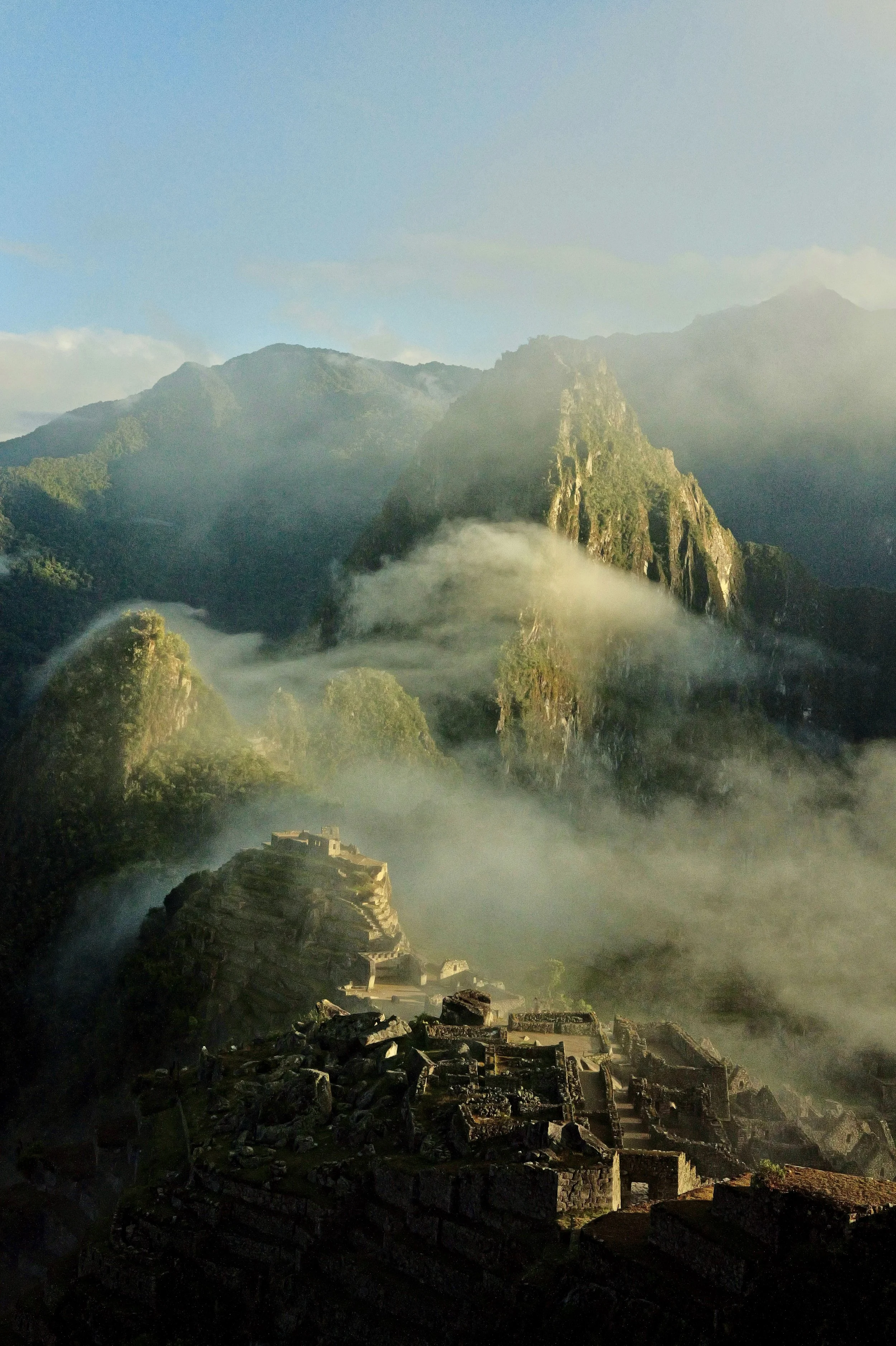
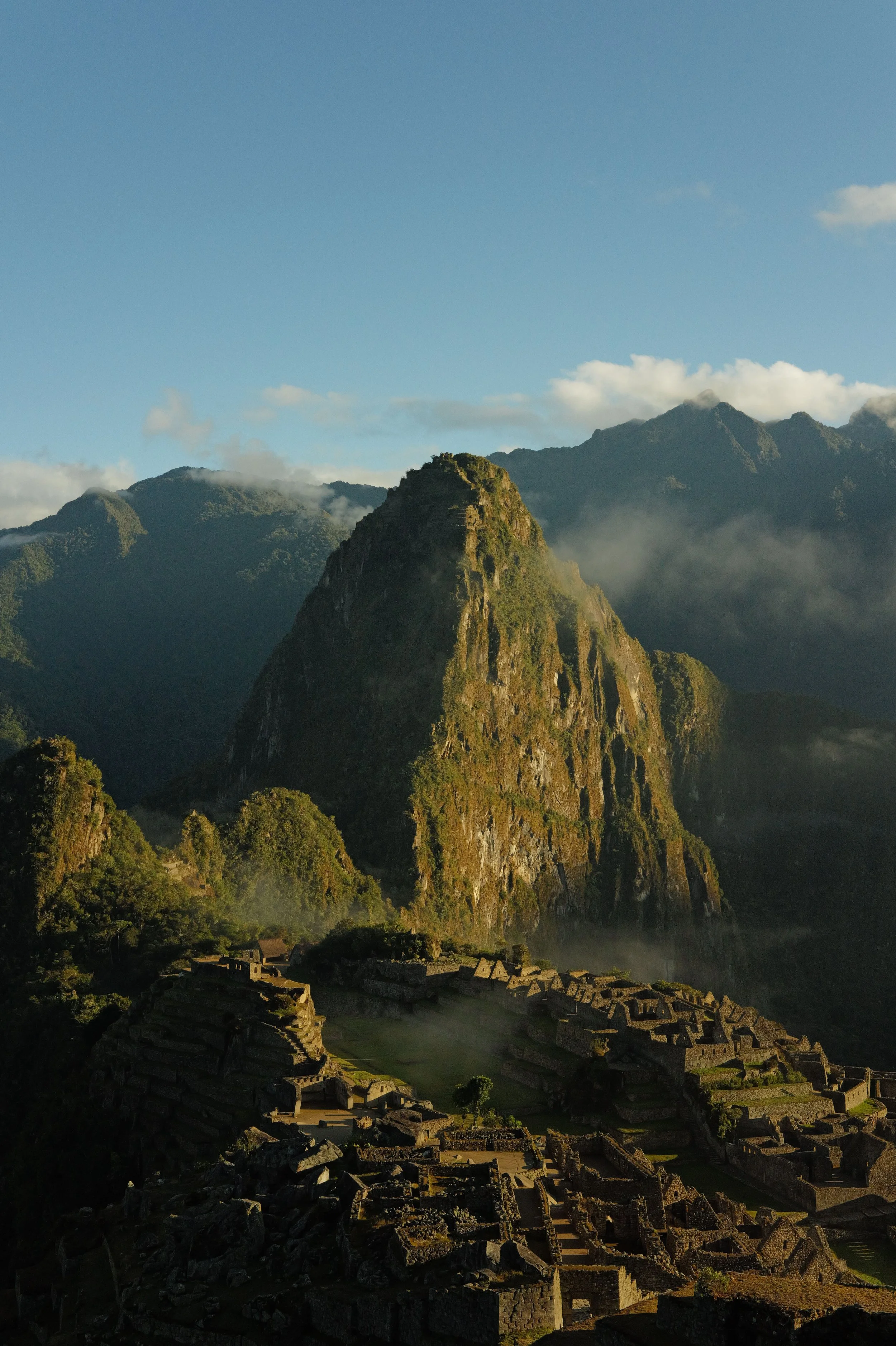
We personally chose to start with Montaña Machu Picchu (Circuit 1A). It’s definitely challenging, but the view from the top is just beyond words. You’ll climb steep stone-paved staircases for around 2 hours, for a total of 650 meters of elevation gain. From the top, you‘ll be rewarded with a sweeping, bird’s-eye perspective of the citadel spread out below, perfectly framed by the surrounding peaks and the Urubamba River.
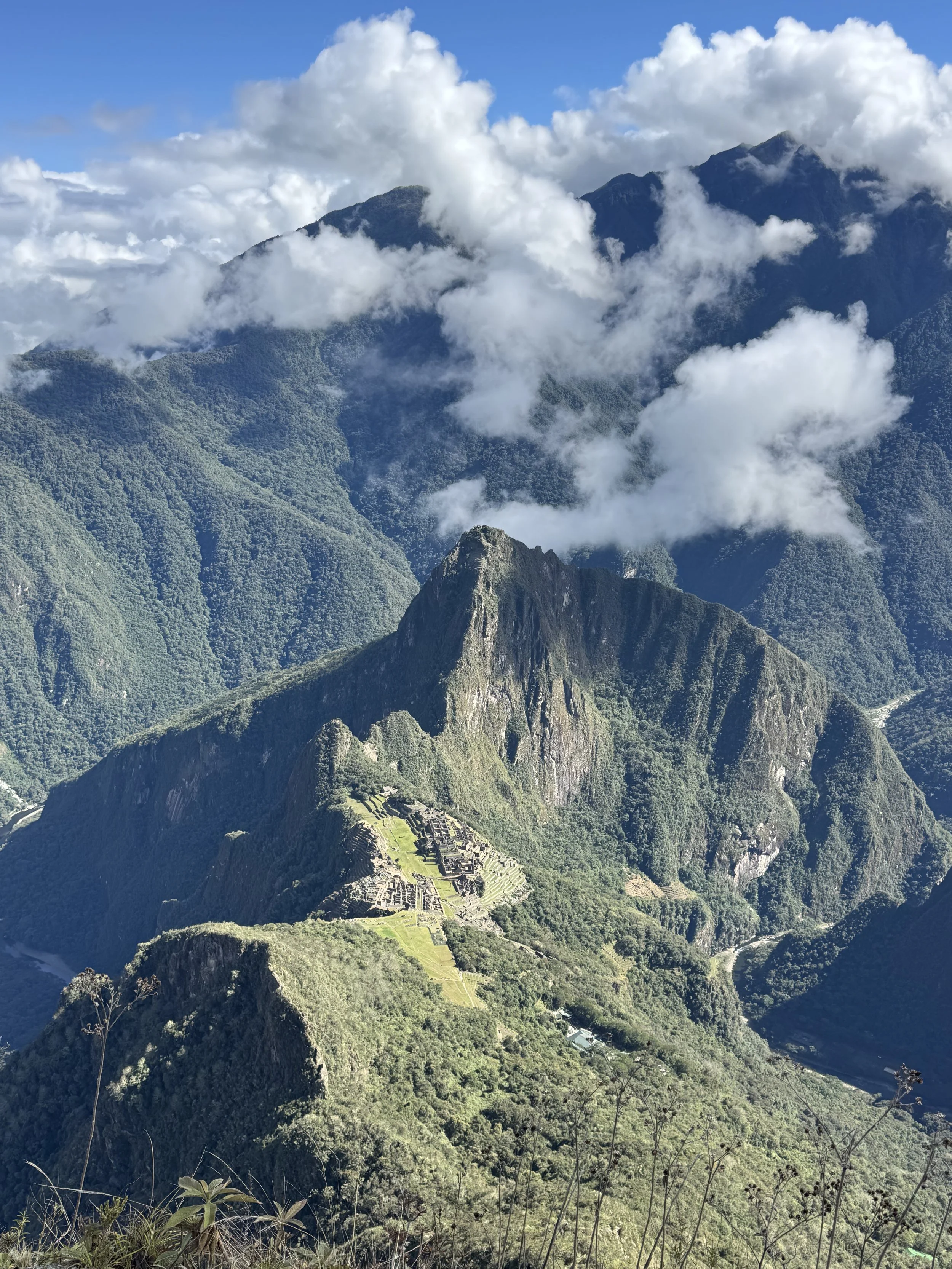
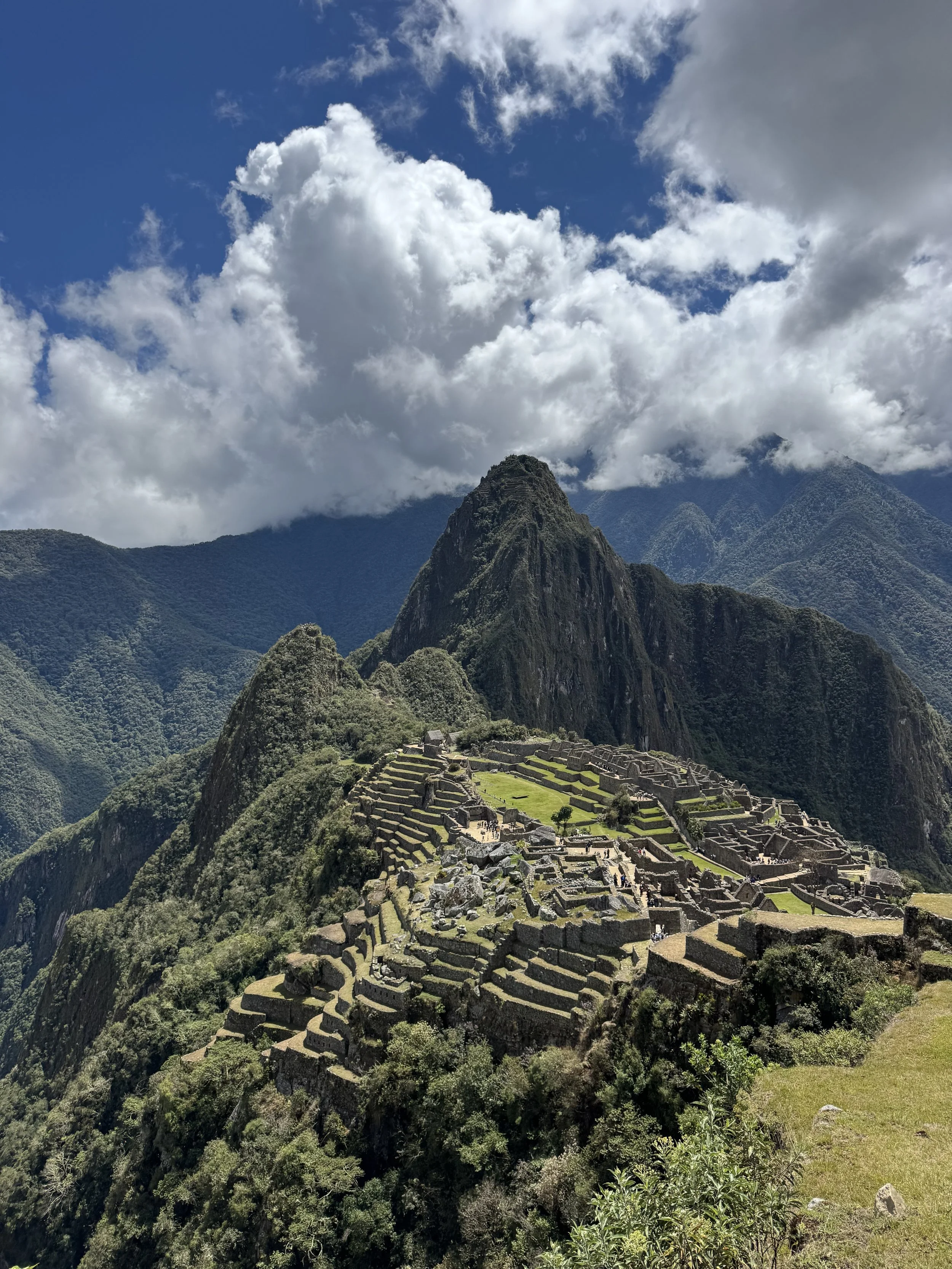
As the hours pass, you will notice how the scene at Machu Picchu changes dramatically. The shifting light, the colors, and the drifting clouds transform the landscape continuously, making it almost impossible to leave - and leaving you with a quiet urge to return and experience it all over again.
Once back in Aguas Calientes, it’s time for a well deserved spa treatment, some chill and relaxation before dinner. Tomorrow, you’ll be doing it all over again!
For the second day, we opted for Montaña Wayna Picchu (Huayna Micchu) - Circuit 3B. Much shorter in distance than Machu Picchu Mountain, but significantly steeper and more vertical, it features narrow, cliffside stone steps and cable handrails in exposed sections, and requires a good head for heights. The elevation gain is only 300 meters, but it’ll also take almost 2 hours to get to the top. Once reached the top, a direct view down onto the archaeological site will open up, offering a striking angle that few view points can match.
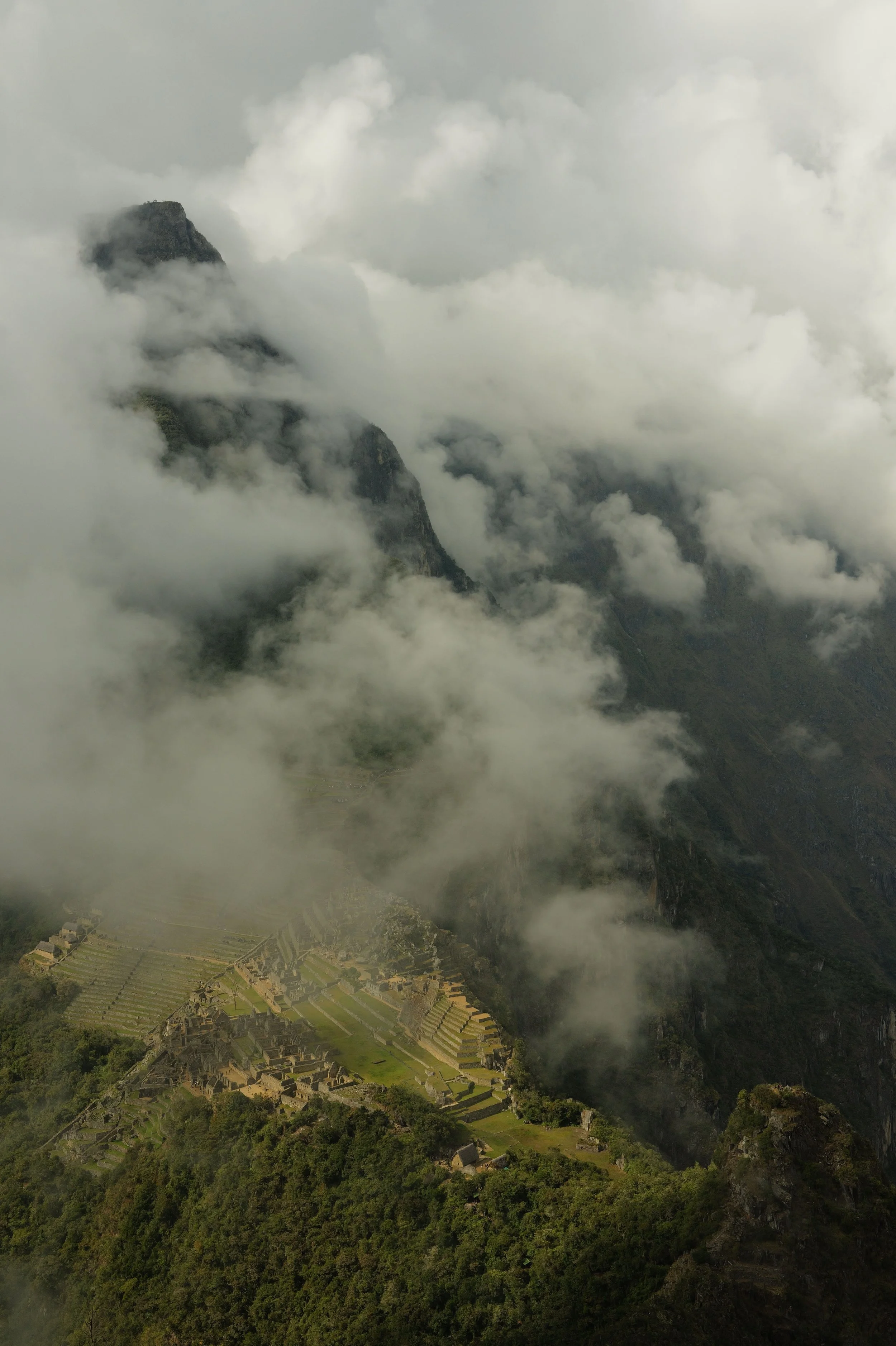
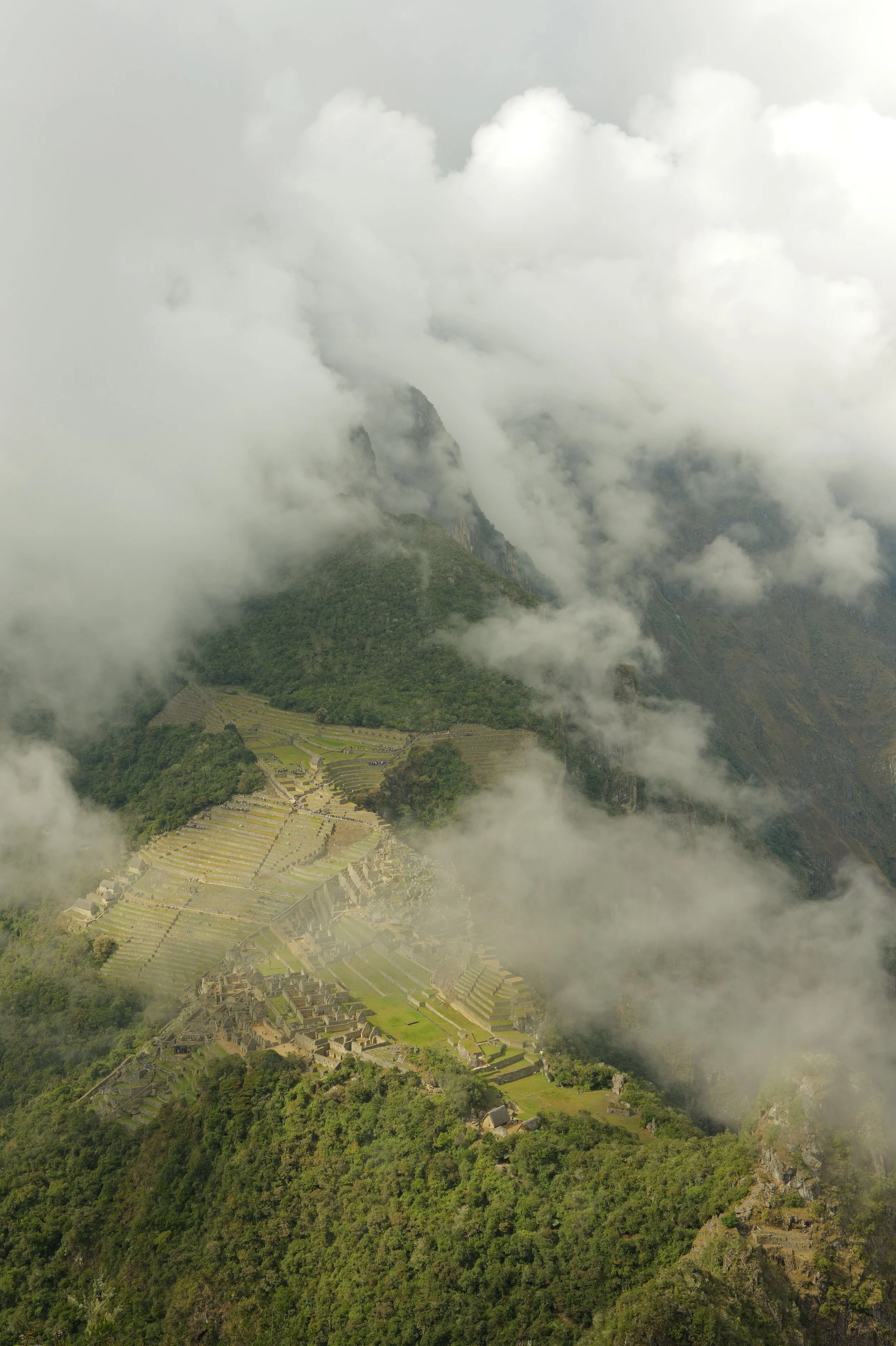
On your way down, stop for a last time at the upper and/or lower terrace to take in the beauty for the very last time.
The hard work is definitely over. It’s finally time to relax!
We honestly didn’t find any relevant place in Aguas Calientes that we recommend for dinner. Considering the early morning rises, your best option is probably to have dinner at your hotel. If you’re not sure where to go, Inkaterra’s restaurant is a good option - fine food and service that’ll do the job.
Day 17 - Back to Lima and back home
If you’re going back to Lima, your best option to get there is to take the train back to Cusco and a flight from there.
It won’t be easy to accept that the journey has come to an end - as it won’t saying goodbye to a country as captivating as Perù, bound to stay with you long after you return home. The good news is that you can always come back to explore the corners you haven't reached yet.
If you’d like further details or trusted contacts for local drivers and guides, feel free to reach out.
Our practical suggestions for you
How long: 14 days minimum.
Season: May-September is ideal for the Andes and Highlands as it’s for hiking - Clear blue skies and minimal rain.
How to travel through the country: You’ll definitely need to take the plane for longer routes, otherwise by train or car. If you opt for a car, better if with a driver.
Practical advice:
Pack light: you won’t need much and it’ll be much easier moving around.
Pack in layers - you’ll probably get warm days and cold nights and mornings. Be sure to have a waterproof jacket, comfortable shoes and a hat.
Of all the restaurants in Peru, MIL is the one place you cannot miss - be sure to book your table in advance!
Book in advance - especially train tickets to and from Aguas Calientes (Machu Picchu), bus tickets from Aguas Calientes to Machu Picchu’s entrance and Machu Picchu’s entrance tickets.
Machu Picchu - there are several trails available. Not all of them are always open though, and their opening hours may vary. We suggest you check very well before booking, primarily depending on your fitness level.